

Cancer Awareness & Oncology
Living Beyond Cancer: What Survivorship Looks Like Today
by Dr Angela Pang – OncoCare Cancer Centre

Cancer survivorship is about more than overcoming disease – it is about rediscovering joy, rebuilding confidence and embracing life beyond treatment.
As an oncologist, I spend much of my day discussing scans, treatment plans, side effects, blood counts and survival outcomes. Over time, however, I have realised that some of the most meaningful conversations happen after treatment ends. These conversations often centre on cancer survivorship – the journey of living well during and after cancer treatment. They often begin quietly: a patient who has completed chemotherapy tells me she finally has the energy to travel again; a young father proudly shows me photographs from his child’s birthday celebration – a milestone he once feared he might not live to see; while another survivor talks about returning to work, exercising again or simply making plans for the future.
These moments are deeply significant. They reflect an important shift in modern oncology: more people are not only surviving cancer but also learning how to live fully after it. Today, advances in screening, surgery, radiotherapy, targeted therapy, immunotherapy and supportive care have transformed outcomes.
Many cancers that once had limited treatment options are now highly treatable or manageable over the long term. More patients are living longer and healthier lives than ever before. With this progress comes a hopeful new chapter – cancer survivorship.
BEYOND SURVIVAL
For many people, the word “cancer” still evokes fear. This is understandable. A diagnosis can feel life-altering, especially for adults in the prime of their lives. Many are balancing careers, relationships, children, finances and future aspirations all at once. But one of the biggest changes I have witnessed is that the conversation is evolving. Increasingly, survivorship becomes part of the story from the very beginning.
Cancer survivorship refers to life during and after treatment. It includes physical recovery, emotional well-being, returning to work, rebuilding confidence, reconnecting with loved ones, and rediscovering meaning and joy. Importantly, survivorship is not about pretending cancer never happened. It is about recognising that life after cancer can still be rich, fulfilling and hopeful.

Cancer survivorship is about regaining strength, embracing healthy living and rediscovering the freedom to enjoy life beyond cancer.
THE STRENGTH PATIENTS OFTEN DO NOT REALISE THEY HAVE
One of the privileges of being an oncologist is witnessing the resilience of patients. I remember a woman in her early 40s whom I treated for breast cancer. During chemotherapy, she worried constantly about her family and career. Like many younger patients, she struggled with fatigue, hair loss, uncertainty and the emotional impact of feeling physically vulnerable.
When treatment ended, recovery took time. Gradually, she began reclaiming parts of her life. She returned to work, resumed exercise and travelled with her family. Slowly, her confidence returned. During one follow-up consultation, she smiled and told me, “I finally feel like I’m planning life again instead of just reacting to cancer.” That sentence stayed with me. It captures a shift many survivors experience – from fear back to possibility. Another patient, a young man treated for lymphoma, told me that cancer changed his perspective. Before his diagnosis, he was consumed by work and constantly rushed. After treatment, he became more intentional. He prioritised family, health and everyday moments.
In my clinic, I often see survivors rediscover what matters most to them – relationships, purpose, health and meaningful experiences. Cancer is never something anyone would choose. Yet many survivors emerge with a renewed appreciation for life after the ordeal.
RECOVERY IS ABOUT MORE THAN THE BODY
Modern cancer treatments are increasingly precise and effective. Even so, recovery often involves both physical and emotional adjustments. Some survivors experience fatigue, reduced stamina, numbness in the hands or feet, hormonal changes, or difficulty with concentration and memory. Younger adults may also face concerns about fertility, intimacy, body image or demanding careers.
Long-term effects can also occur. Certain treatments may increase the risk of heart disease years later. Others may lead to bone thinning, early menopause, thyroid problems, lung issues or chronic pain. Some survivors live with ongoing fear of recurrence. Others require long-term medication or monitoring. In some cases, second cancers may develop due to prior treatment or genetic risk. This is why follow-up care remains essential.
Encouragingly, survivorship care has expanded significantly. Today, care extends beyond the disease itself. It often includes rehabilitation, nutrition guidance, fertility counselling, exercise programmes and emotional support. Monitoring for late effects is also a key component.
There is growing evidence that healthy lifestyle habits support recovery. Regular exercise, balanced nutrition, good sleep, stress management and smoking cessation all play important roles. Many survivors find that taking charge of their health is empowering. Most importantly, recovery does not need to be perfect. Healing is often gradual. It happens through small milestones that rebuild confidence over time.
RETURNING TO LIFE AND SOCIETY
One of the most meaningful milestones after treatment is returning to daily life. For many adults, this means going back to work, reconnecting socially, caring for family, travelling or resuming long-postponed goals. These may seem ordinary, but after cancer, they feel profound. Work, in particular, carries deeper meaning. It represents independence, identity and purpose. Many survivors say returning to work helps them feel like themselves again. At the same time, perspectives often change. Patients may become more mindful of work-life balance. They prioritise well-being and time with loved ones.
Relationships can deepen. Families often grow closer through shared adversity. Survivors frequently feel more connected to those who supported them. Friendships and communities also play an important role. Support groups, fellow survivors, healthcare teams and employers can all help rebuild confidence.
Encouragingly, society is becoming more aware of survivorship. Conversations about mental health, workplace flexibility, fertility preservation and quality of life are more open than before. This awareness helps survivors feel supported and less alone.
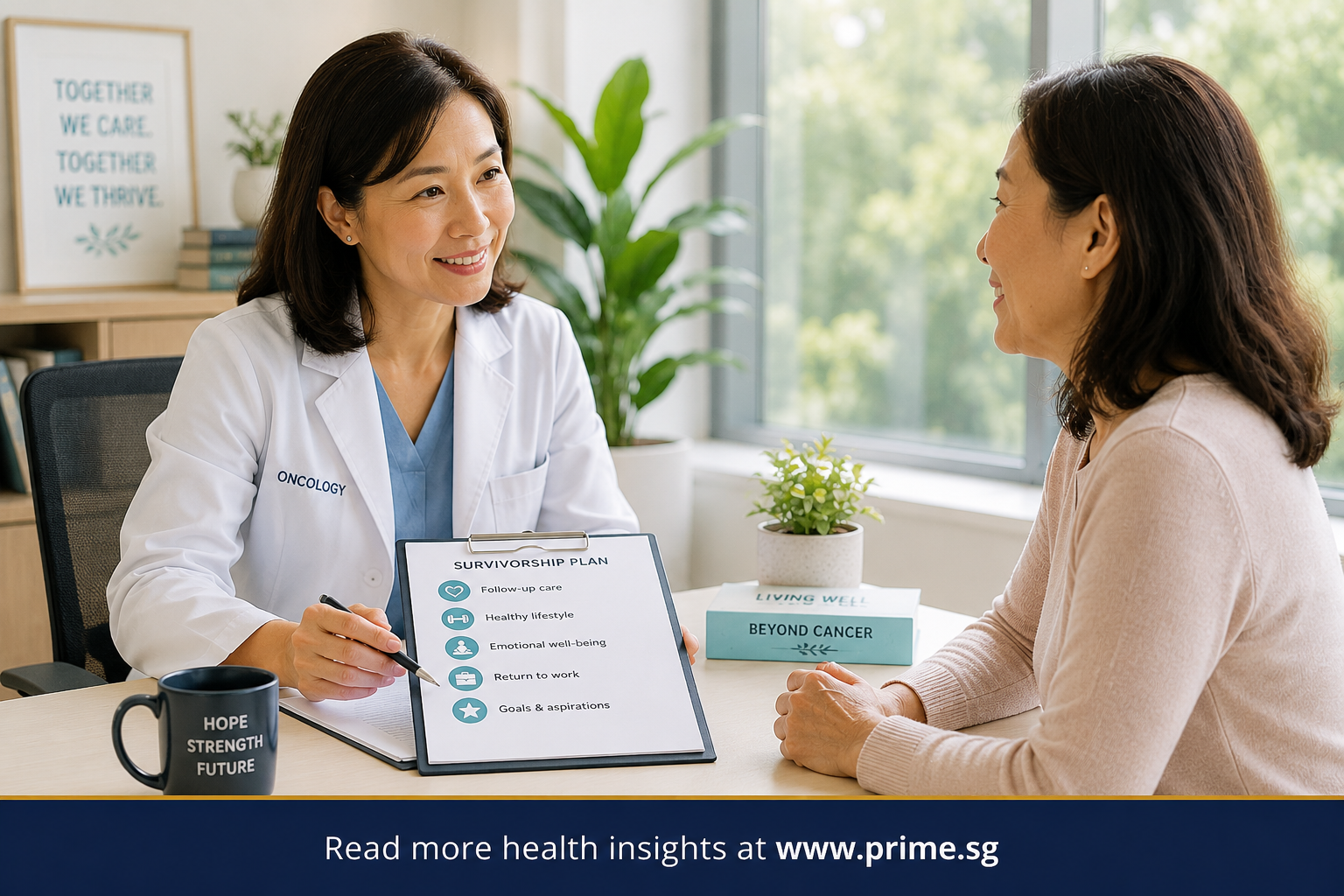
Cancer survivorship extends beyond treatment, focusing on long-term health, emotional wellbeing and helping patients return to a fulfilling life.
A NEW ERA OF CANCER CARE
One of the most hopeful developments in oncology is that we are no longer talking only about survival statistics. We are also focusing on quality of life, emotional wellbeing and long-term health. As oncologists, we now ask broader questions:
Can patients pursue their dreams after treatment?
Can young adults build families and careers?
Can survivors maintain independence, confidence and joy?
Increasingly, the answer is yes. Survivorship is not always straightforward. Some patients continue to face uncertainty, long-term side effects or emotional challenges. But it is no longer defined only by hardship. It is defined by resilience, adaptation and hope.

Cancer survivorship is about more than survival – it is about embracing health, hope and the freedom to enjoy life beyond cancer.
LIVING BEYOND CANCER
Cancer can change people in ways that scans and blood tests cannot capture. It can interrupt lives, challenge identities, and bring unexpected fears. But it can also reveal something deeply inspiring.
I have seen patients who were once terrified at diagnosis return to my clinic excited about the future – a new job, a wedding, a long-awaited holiday or a child’s graduation. Sometimes, it is simply the joy of feeling well enough to enjoy everyday life. I have also seen survivors become stronger advocates for their health, are more present with their loved ones and more appreciative of what truly matters. Survivorship is not about returning to life exactly as it was. It is about moving forward – often with greater perspective, deeper gratitude and renewed purpose. Perhaps, that is one of the most powerful lessons modern cancer care has taught us. Beyond every diagnosis, there can still be hope, meaning, connection and life. Because today, more than ever before, people are not simply surviving cancer. They are learning how to live well beyond it. PRIME




Leave A Comment