

Environment & Sustainability
2,150 Times the Size of Singapore: Is Ocean Plastic Coming Back to Us Through Our Food?
PRIME
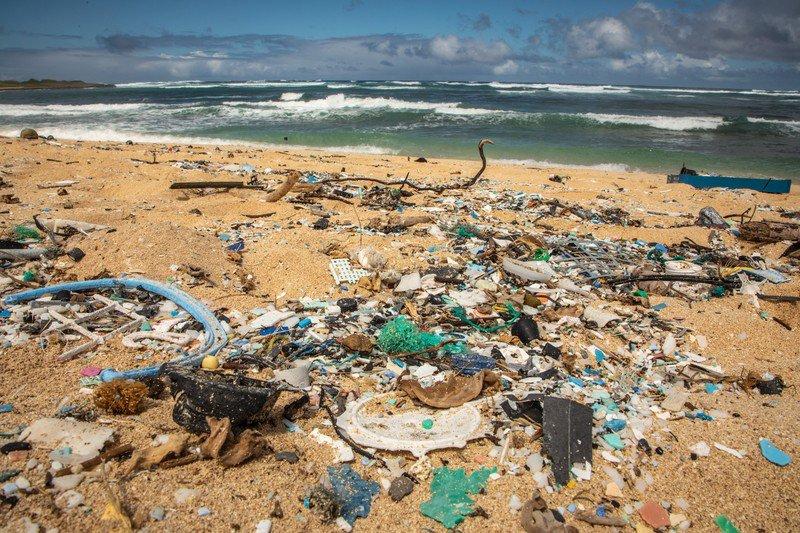
Plastic waste and discarded fishing gear litter a beach, showing how ocean pollution can harm marine life and coastal ecosystems.
The Great Pacific Garbage Patch is not a solid island of rubbish. It is dispersed and difficult to remove. It also affects ecosystems and seafood, with possible implications for human health.
Editorial note: Evidence reviewed in August 2026. This article separates proven environmental harm from emerging questions about human health.
Picture Singapore repeated roughly 2,150 times across the Pacific. Now imagine plastic fragments, fishing nets and discarded objects drifting across that immense, shifting expanse. This is the Great Pacific Garbage Patch. It is not a solid island of rubbish. Instead, it is a pollution zone that is difficult to see, define and remove.
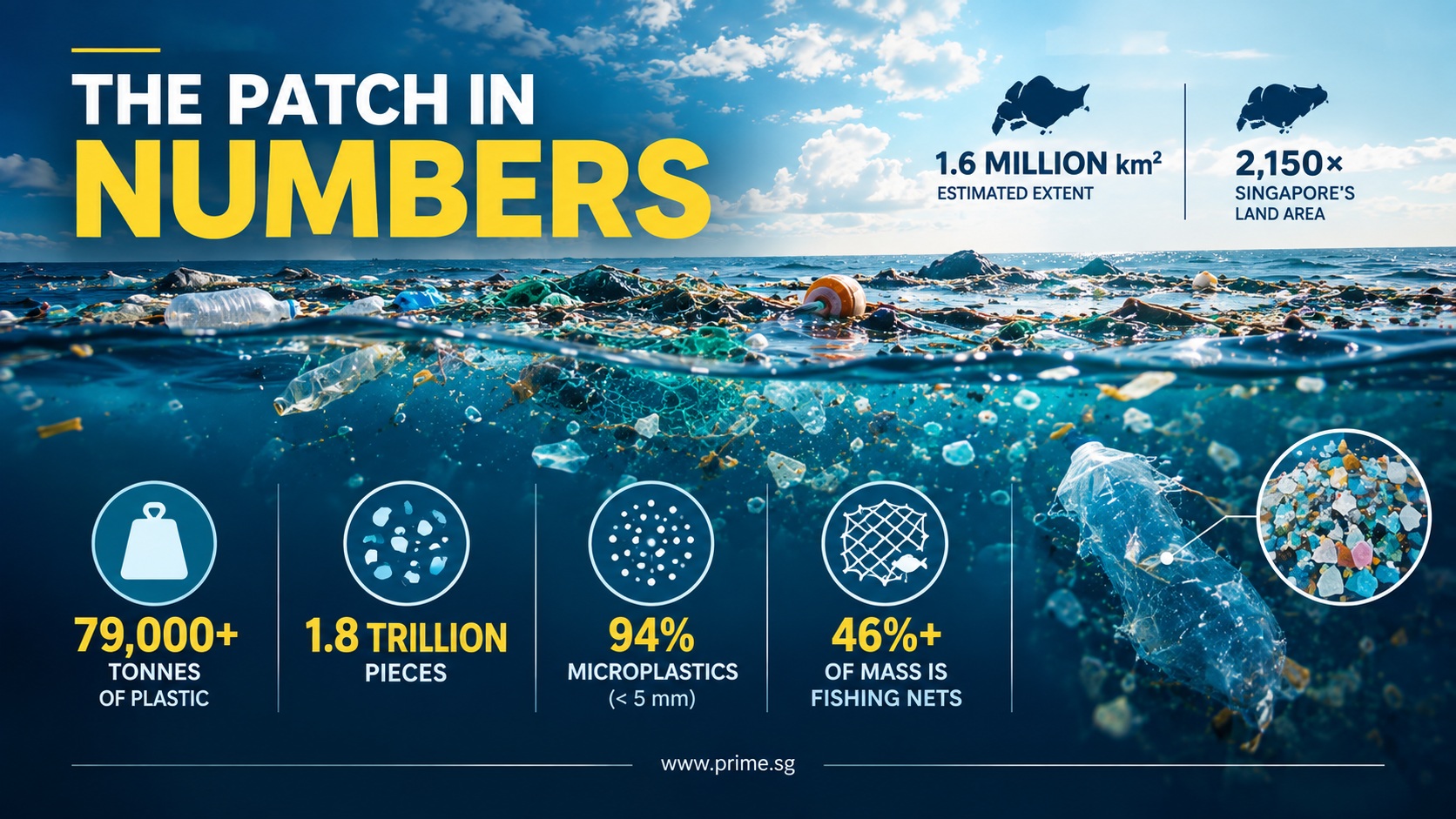
The Great Pacific Garbage Patch spans an estimated 1.6 million square kilometres—about 2,150 times Singapore’s land area—and contains at least 79,000 tonnes of plastic.
THE PATCH IN NUMBERS
Estimated extent: 1.6 million km²
Singapore comparison: about 2,150 times Singapore’s land area
Estimated plastic mass: at least 79,000 tonnes
Estimated number of pieces: approximately 1.8 trillion
Microplastics: about 94% of pieces counted
Fishing nets: at least 46% of estimated mass
A plastic ‘soup’, not a floating landfill
The US National Oceanic and Atmospheric Administration (NOAA) compares garbage patches to pepper flakes swirling in soup. The patch contains bottles, crates, ropes and abandoned fishing gear. Yet many pieces are microplastics, which measure less than five millimetres. Some start as tiny fibres shed by synthetic textiles. Sunlight, waves and weather also break larger objects into ever-smaller fragments.
Plastic does not disappear when it fragments. Smaller pieces become harder to retrieve. Marine organisms also encounter them more easily. Currents spread these fragments through ocean water, sediments and food webs. The ecological damage is already clear. Animals become entangled in discarded gear or mistake plastic for food. Debris also damages habitats and carries organisms into unfamiliar environments.
How large is the Great Pacific Garbage Patch?
The patch has no fixed shoreline, so researchers cannot measure it like an island. Winds, currents and seasons constantly shift its boundaries. Researchers locate the patch by finding areas with higher plastic concentrations than surrounding waters. In 2018, a major survey-based study estimated an area of about 1.6 million square kilometres. That is roughly twice the size of Texas and more than twice the size of Borneo. It is also about 2,150 times Singapore’s total land area. This comparison uses Singapore’s official December 2025 land area of 744.3 square kilometres. However, debris spreads across this area rather than forming an unbroken layer of rubbish.
The study estimated at least 79,000 tonnes of floating plastic in the patch. Its uncertainty range ran from about 45,000 to 129,000 tonnes. Researchers also estimated approximately 1.8 trillion individual pieces. Microplastics made up about 94% of the pieces, but larger objects carried most of the weight. Debris larger than five centimetres contributed more than three-quarters of the estimated mass. Fishing nets contributed at least 46%. These estimates do not provide a live inventory. However, they reveal a serious combination: countless hard-to-retrieve particles and heavy gear that can keep trapping wildlife.
The negative effects go beyond an untidy ocean
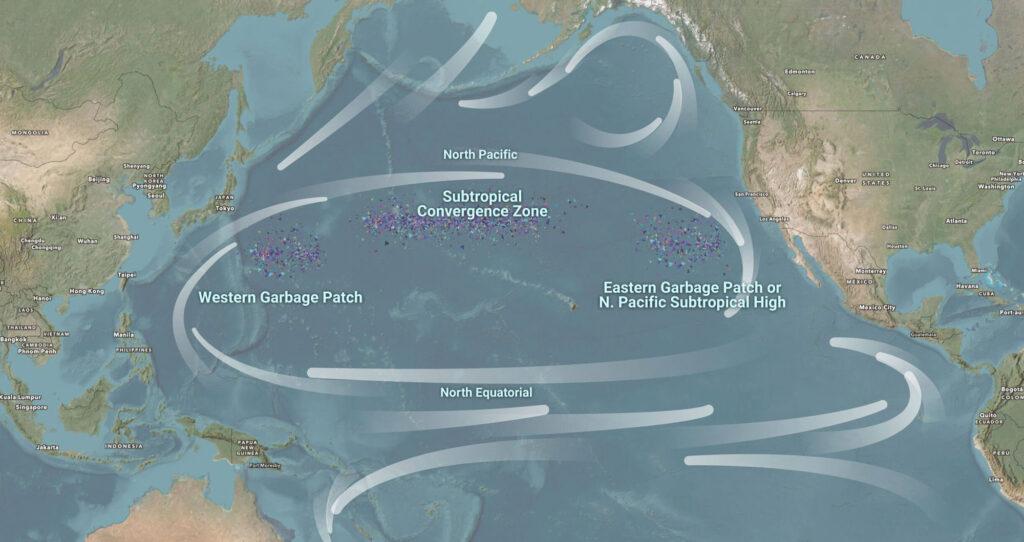
Ocean currents concentrate floating plastic across the North Pacific, forming the Western and Eastern sections of the Great Pacific Garbage Patch.
Marine animals face the most immediate harm. Turtles, seals, whales, seabirds and fish can become trapped in nets, lines and packing bands. Entanglement restricts swimming and feeding. It can also cut tissue, cause infection, or lead to drowning and starvation. A lost fishing net does not stop fishing when its owner leaves. It can drift for years and continue to trap, injure and kill wildlife. Experts call this process ghost fishing.
Animals can also mistake plastic for food. Swallowed debris may block or injure the digestive tract. It can leave less space for real food or expose animals to chemicals linked to the plastic. Larger debris and derelict gear can smother or scrape sensitive habitats. Floating objects may also carry organisms into new environments. As plastic fragments, more organisms can encounter it and removal becomes harder.
The effects are economic and social as well as ecological. Marine litter damages boats and fishing equipment. It creates navigation hazards, reduces fishing opportunities and raises coastal clean-up costs. It can also make beaches less attractive to residents and visitors. UNEP estimated that global costs to tourism, fisheries, aquaculture and clean-up reached billions of US dollars in 2018. We cannot isolate the patch’s exact share. However, it forms part of the same worldwide plastic-pollution system.
Does the patch put plastic on our plates?
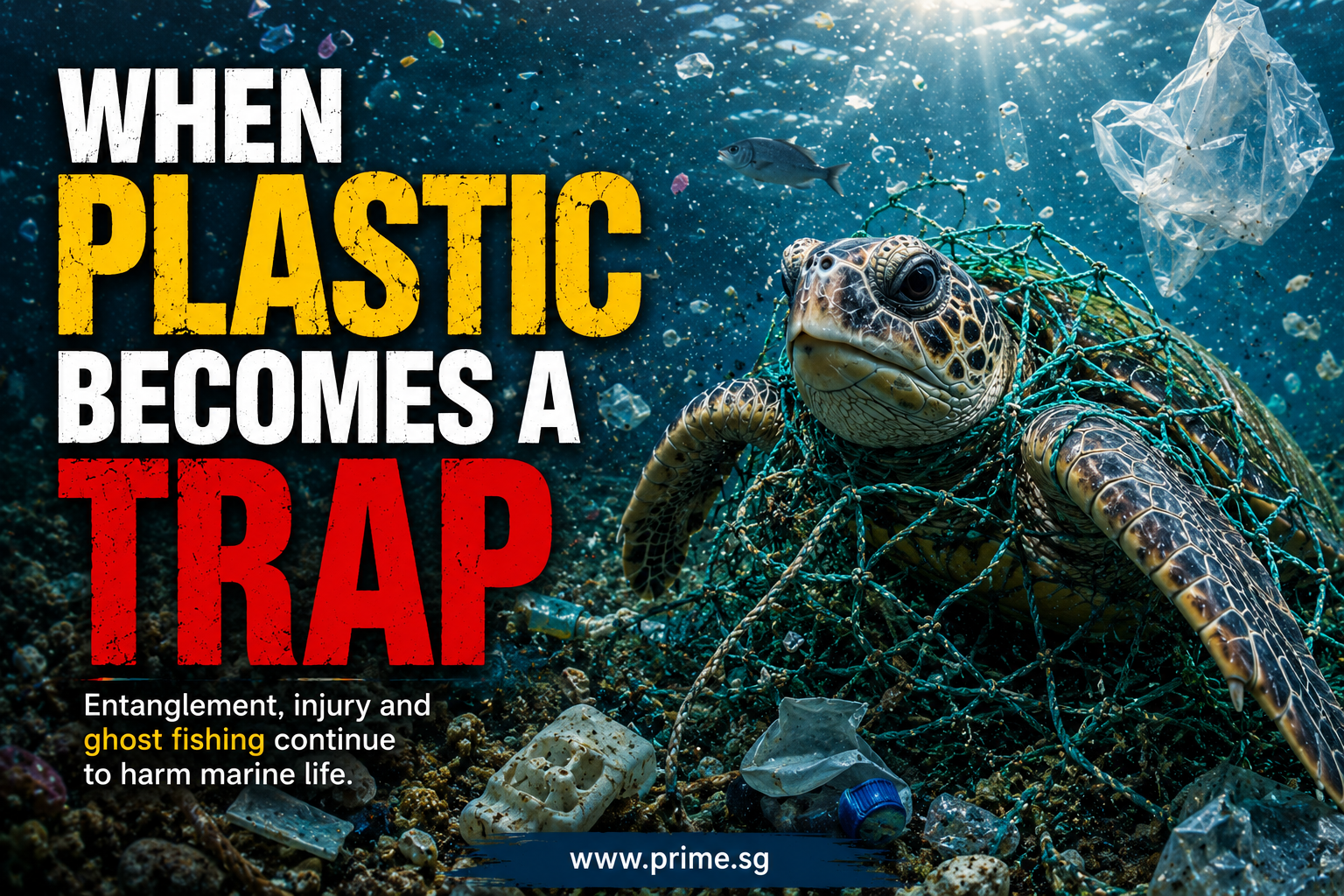
Discarded plastic and lost fishing nets can trap, injure and kill turtles and other marine animals through a process known as ghost fishing.
Not in a simple, direct line. We should not claim that plastic from the patch travels straight into seafood sold in Singapore. Singapore imports seafood from many regions, while plastic pollutes oceans and waterways worldwide. People also encounter microplastics through more than seafood. Researchers have found particles in food, drinking water and air. However, exposure estimates vary widely because scientists do not yet use fully standardised sampling and measurement methods.
Seafood nevertheless helps us understand one possible pathway. Small marine animals may ingest microplastics. Larger animals may then eat them. Exposure varies by species and by the body parts people consume. Gutting a fish removes much of its digestive tract. In contrast, people often eat shellfish such as mussels and oysters whole, including their digestive tissues. This does not mean that seafood is unsafe. Scientists still need better data on particle size, quantity and chemical composition. They also need to understand what happens after people ingest these particles.
What do we know about human health?
The most responsible answer is that we have reason to investigate, but not enough evidence for sweeping claims. Laboratory and animal studies suggest that some micro- and nanoplastics may trigger inflammation, oxidative stress or other biological effects. The outcome may depend on each particle’s size, shape, polymer and associated chemicals. Researchers have also detected plastic particles in human tissues. However, detection alone does not prove that these particles caused disease.
The World Health Organization has highlighted major gaps in exposure data and toxicology. The European Food Safety Authority also continues to assess micro- and nanoplastics in food. Scientists need consistent testing methods and stronger human evidence before they can quantify the risk with confidence. Current evidence does not support claims that seafood microplastics definitely cause cancer, infertility or heart disease.
Consumers should keep the risk in perspective. Fish and shellfish remain valuable sources of protein and nutrients. Current evidence gives us no reason to abandon seafood because of the Great Pacific Garbage Patch. A stronger response is to stop plastic from entering the environment while research continues.
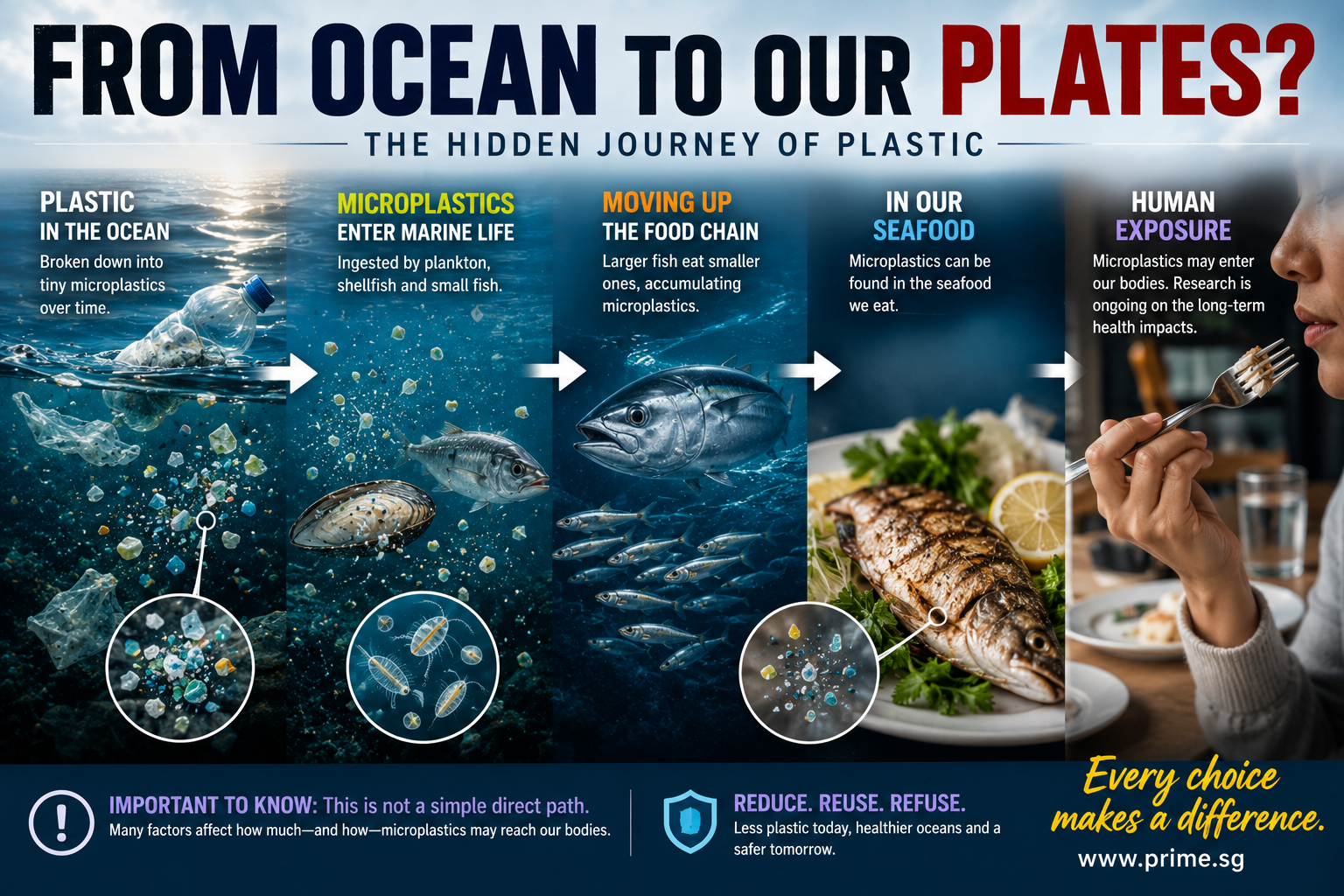
Microplastics can enter marine organisms and move through ocean food webs into seafood. However, scientists are still studying the extent of human exposure and its possible health effects.
Why this matters to Singapore and Southeast Asia
The patch may lie far from Singapore, but marine plastic does not. Dense coastlines, major shipping routes and important fisheries make this a regional concern. Rapid urban growth and uneven waste-management capacity add to the challenge. Currents and seasonal weather carry plastic across borders. No country can solve the problem alone.
Singapore’s National Environment Agency studied six local coastal sites from 2016 to 2019. It reported that plastic made up more than 90% of the marine litter there. A later national study sampled rivers, reservoirs, coastal waters and recreational beaches. Researchers modelled the debris pathways. They found that most plastic reaching surveyed beaches came from the sea or crossed national borders. Singapore’s major inland waterways contributed less. Monsoon conditions also influenced how debris travelled and accumulated. These findings show the value of Singapore’s waste controls. They also strengthen the case for coordinated regional action.
Can the garbage patch simply be cleaned up?
Removing large objects, especially abandoned fishing gear, can prevent further harm and fragmentation. However, crews cannot easily clean the entire patch. Debris spreads across a vast, moving area and mixes with marine life. This makes removal difficult, expensive and potentially disruptive. Cleanup still has a role, but prevention works better. Governments and businesses can improve waste collection and redesign packaging. They can reduce unnecessary disposable products and intercept litter before it reaches water. The fishing industry can also prevent gear from becoming lost or discarded.
What individuals can do without becoming overwhelmed
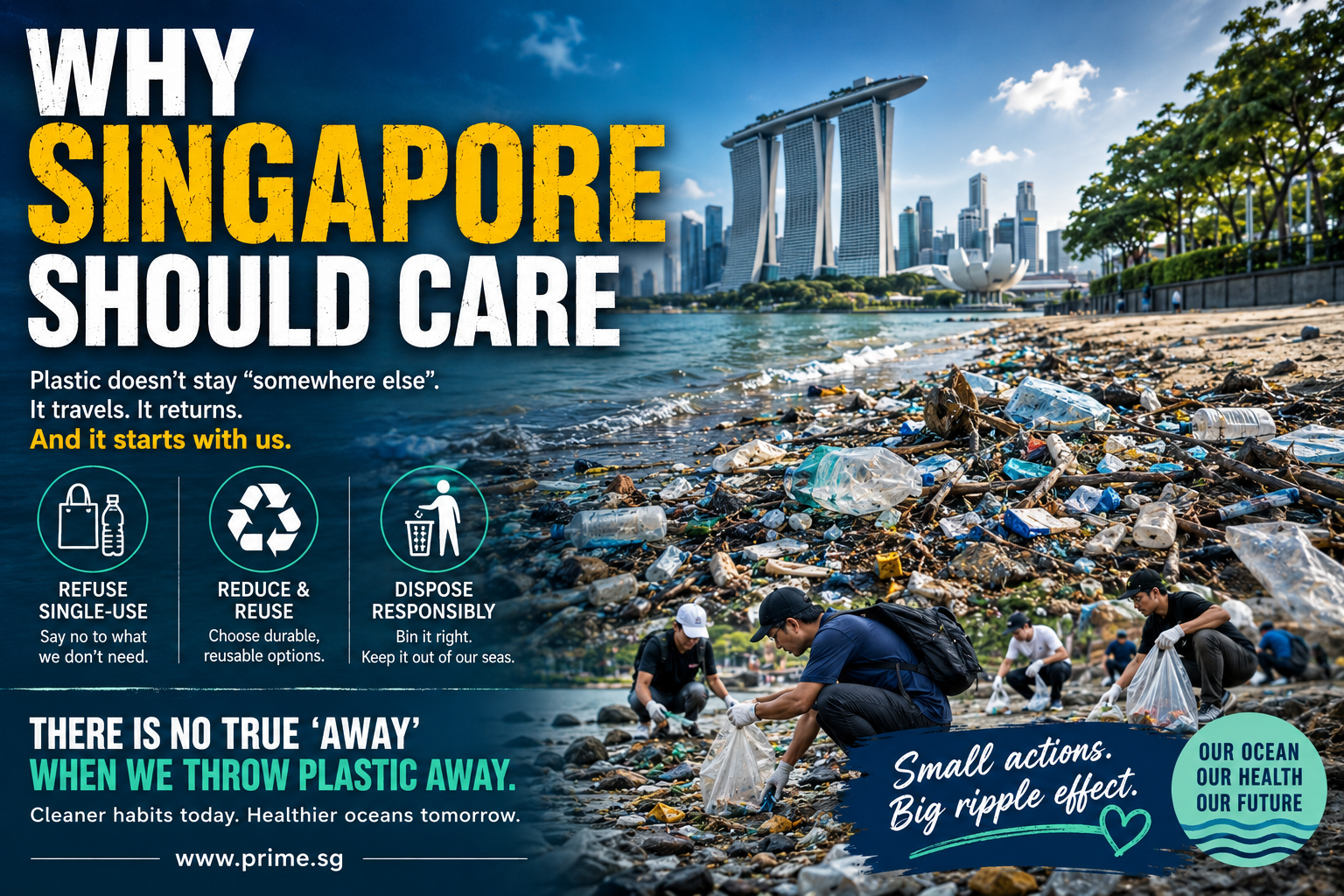
Marine plastic can cross borders and wash onto Singapore’s shores. Reducing single-use items, choosing reusable alternatives and disposing of waste responsibly can support cleaner oceans.
No single household created the patch, and consumers cannot solve it alone. Still, practical habits can support wider change. Choose durable reusable items when they genuinely replace repeated disposables. Do not heat food in damaged or unsuitable plastic containers. Wash synthetic clothing only when needed and use fuller loads. Dispose of waste securely and join credible coastal clean-ups. Support businesses and policies that reduce unnecessary packaging and improve collection systems.
The Great Pacific Garbage Patch is more than a distant environmental curiosity. It proves that there is no true ‘away’ when we discard plastic. Plastic can enter rivers, cross borders and circle oceans. It can break into particles and remain in the environment for generations. Science is still determining what this means for human health. For marine life, the warning has already arrived.
Prime takeaway: Evidence clearly shows that marine plastic harms the environment. Scientists have not yet settled the scale of harm to human health. We can support prevention without exaggerating what current research proves. PRIME








Leave A Comment