

Eye Health Series
How Stress Affects Your Eyes
by Dr Khor Wei Boon – Singapore Eye & Vision
Chronic stress can affect eye health, increasing the risk of vision problems and fatigue.
In my previous article, I described how the stresses of modern life – long working hours, excessive screen time, and chronic sleeplessness – can impact our eyes. When our bodies are in a constant state of tension, it can lead to various visual symptoms. These include eye strain, blurry vision, irritation, and headaches. While these symptoms are typically harmless and improve with adequate care and rest, physical and emotional stress can also trigger or aggravate certain eye conditions.
Dry Eye Disease
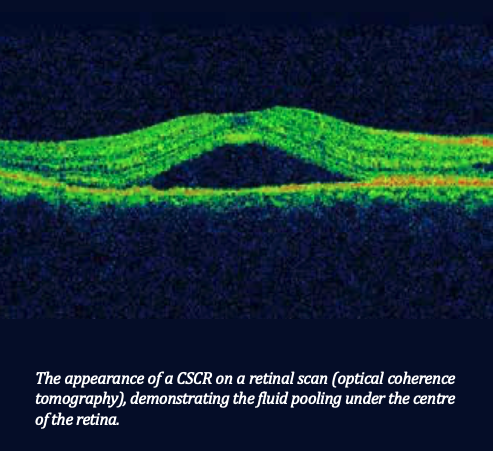
Retinal scan showing fluid buildup linked to central serous chorioretinopathy, a stress-related eye condition.
Dry eye disease (DED) is one of the most common eye conditions seen in adults over 50, and it is also one of the most sensitive to stress. Patients may experience burning, redness, excessive tearing, or fluctuating vision that comes and goes throughout the day.
Why Stress Worsens Dry Eyes
All of us experience some dryness in our eyes from time to time. However, in DED, underlying eye problems result in chronic dryness. These problems may affect the production of tears in our eyes, or result in faster evaporation of tears, or both. This long-term reduction in tears on the surface of the eyes provokes inflammation. The inflammation can further affect tear production and stability, creating a vicious cycle that perpetuates DED. Risk factors for reduced tear production include age and menopause, as well as autoimmune conditions, and certain oral medications. Conditions that can affect tear evaporation and stability include blepharitis (inflammation and excessive oil production from the eye lids), contact lens wear, and poor eyelid closure. Some researchers are also investigating whether prolonged near work and digital device use can lead to DED. However, the evidence remains inconclusive.
How Stress Affects the Tear Film
Many patients with DED notice that their symptoms worsen during periods of emotional strain, poor sleep, illness, or major life changes. When people are stressed, they tend to blink less frequently and less completely. This is especially common during reading or screen use. This leads to faster evaporation of tears and instability of the tear film. At the same time, stress hormones such as cortisol can alter the body’s pain response, making the ocular surface more sensitive and reactive to pain. Systemic inflammation can also increase during periods of stress. Inflammation on the surface of the eye may worsen in dry eye patients.
Treatment of DED can be challenging. It typically includes reducing triggering factors such as managing blepharitis, limiting screen time, and reducing contact lens wear. Regular lubricating eyedrops and gels may also help relieve symptoms. Prescription eye drops may also increase tear production and reduce inflammation. Studies have also suggested that regular sleep, stress management, and mindfulness training may have a role in the holistic management of DED.
Eyelid Twitching (“Myokymia”)
Another stress-related eye symptom that brings people to the clinic is eyelid twitching, medically known as myokymia. This usually presents as an involuntary, repetitive fluttering of the upper or lower eyelid. While it can look alarming in the mirror, eyelid twitching is almost always harmless.
Myokymia is strongly associated with stress, fatigue, and/ or high caffeine intake – factors that often coexist. The muscles of the eyelid are controlled by delicate nerve signals, and stress and caffeine can make these nerves more excitable. Once triggered, the twitching can last for hours or even days. However, it usually comes and goes. For people under sustained stress, persistent twitching can become a source of anxiety. Ironically, this may make the twitching worse. Conversely, the twitching typically resolves with adequate rest, reduction in caffeine consumption, and stress management.
It is important to distinguish myokymia from rarer neurological conditions, such as blepharospasm, where there is involuntary and forceful closing of both eyes at the same time; or a hemifacial spasm, where there is twitching and pulling of the muscles on one side of the face. A consultation with your ophthalmologist can help distinguish between these conditions and guide the appropriate treatment.
Central Serous Chorioretinopathy
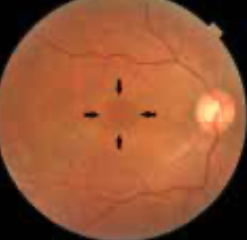
Fundus image of the retina used to detect early signs of eye disease and vision disorders.
One condition that deserves special mention when discussing stress and eye health is central serous chorioretinopathy, often abbreviated as CSCR. This is an eye condition that affects the retina, which is the light-sensitive layer at the back of the eye. Patients with CSCR may describe blurry vision. Some may notice a dark or yellow patch in the centre of their vision. There may also be visual distortion, where straight lines appear wavy, or objects look smaller than they should be.
The underlying problem in CSCR involves blood circulation beneath the retina, where there is leakage of fluid from the blood vessels. This fluid pools under the centre of the retina, disrupting the retinal cells and resulting in visual symptoms. In many cases, the fluid resolves within 3–6 months without treatment. Vision usually recovers as well. In rare situations where the vision is very poor, or fluid remains beyond 3-6 months, then laser treatment or photodynamic therapy (PDT) may be advised.
Stress and CSCR
CSCR is relatively uncommon but has long been associated with stress and elevated stress hormones, in particular cortisol. It seems to occur more often in individuals with so-called “Type A” personalities, or in people experiencing significant emotional or occupational stress. Researchers have also linked steroids to CSCR. These include tablets, skin ointments, and nasal sprays. Diseases that increase steroid hormone production in the body may also contribute.
Anyone who experiences a sudden change in eyesight should get their eyes checked as soon as possible. Symptoms may include blurred vision, patches in vision, or visual distortion. While CSCR is one possible cause, other diseases such as a retinal detachment or age-related macular degeneration can also present with similar symptoms and require much more urgent treatment.
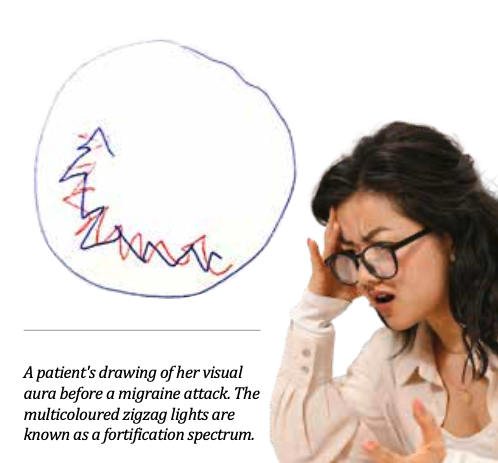
Migraine visual aura with zigzag patterns, a common symptom affecting vision before a headache.
Migraines
Migraines are common and sometimes misunderstood to be just a “bad headache.” In reality, migraines are a neurological condition. They may present as intense throbbing or pulsating pain on one side of the head, often accompanied by nausea, vomiting, and sensitivity to light and sound. The pain can last anywhere from four hours to even three days! Stress is one of the most common triggers for migraines. Emotional tension, disrupted sleep, skipped meals, and hormonal changes can all increase the likelihood of an attack.
Visual Auras and Migraine Symptoms
I often see patients with migraines because they may have experienced visual disturbances before an attack. These are known as visual auras, and may include shimmering or zigzagging lights, flashing patterns, or temporary loss of part of their vision. The symptoms usually affect both eyes. They can last from 15–60 minutes before resolving on their own. Typically, these visual auras occur before the headache occurs and can serve as an early warning to migraine sufferers of an impending attack. Auras can also take the form of tinnitus (ringing in the ears) or even temporary numbness, weakness or tingling in the arms and legs. Not everyone with migraines experience auras, and auras may also not occur in every episode of a migraine.
Managing Migraine Symptoms
Visual auras can be alarming, especially when they occur for the first time, or if they become more frequent. Many people worry that they are developing a serious eye disease, or even a stroke! It is wise to seek an eye evaluation for new or unusual visual symptoms. However, doctors usually believe migraine-related visual disturbances result from temporary disruptions in brain activity rather than problems within the eye itself. Effective management usually involves identifying triggers, addressing lifestyle factors, and, when needed, medical treatment under the guidance of a family physician or neurologist.
Conclusion
These conditions highlight the many ways that stress can show up in the eyes. Some are subtle and merely a nuisance, others are more dramatic with actual changes in vision, yet they all demonstrate the interplay between the mind, body, and vision. Recognising physical and emotional stress as contributing factors allows for a more holistic approach to eye health. This includes medical care, attention to sleep, emotional well-being, and better work-life balance.









Leave A Comment