

Leading a Healthier Lifestyle Can Help Offset Genetic Heart Disease Risk
PRIME

Your genes may influence heart disease risk — but healthy lifestyle choices can still make a powerful difference.
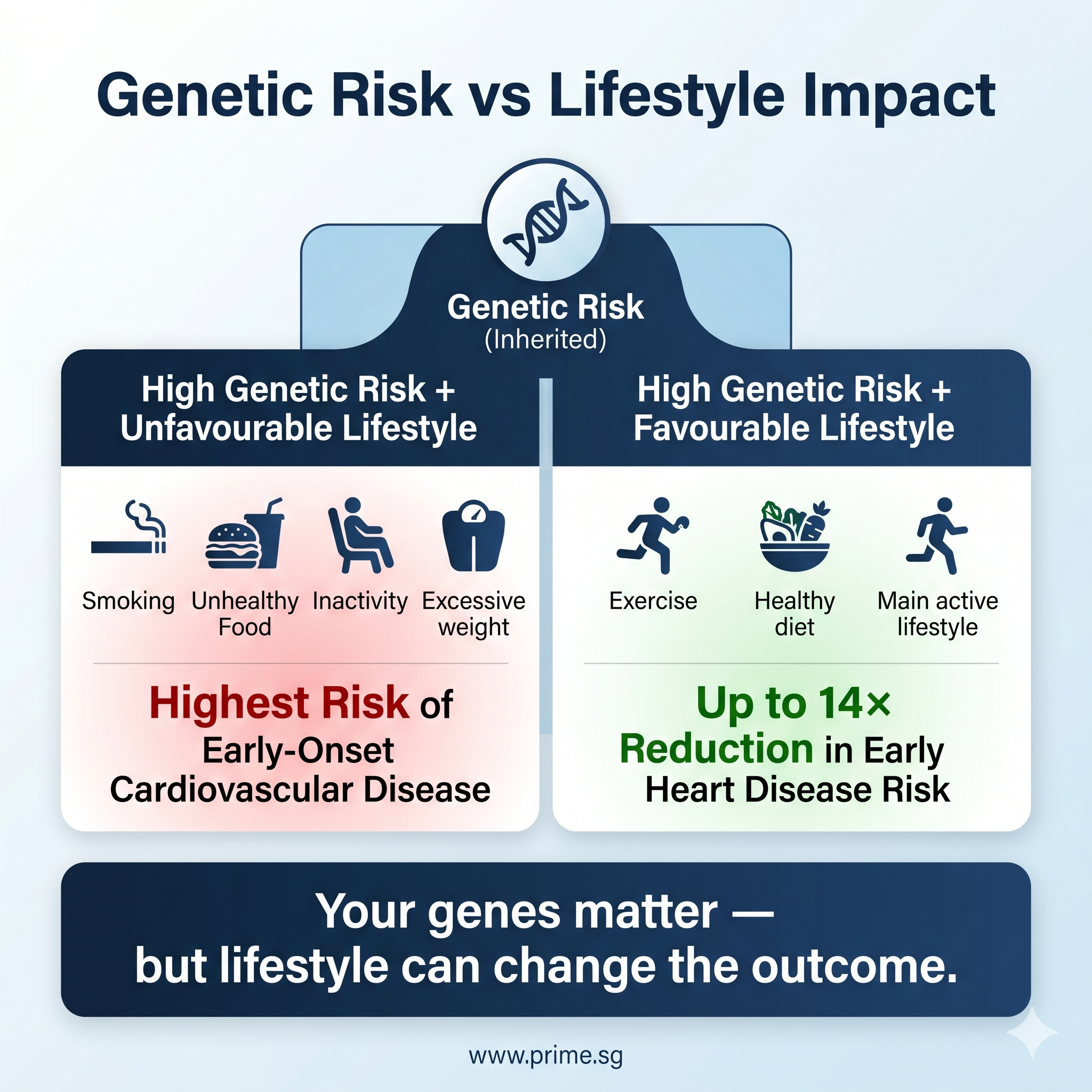
Genetic Risk vs Lifestyle Impact Infographics
How the Study Was Conducted
The research used data from the China Kadoorie Biobank and included 96,400 Chinese adults. Researchers excluded participants with a previous history of heart attack or stroke.
Participants were divided into:
- A training group of 24,251 people
- A testing group of 72,149 people
The average participant age was 53.
The researchers created polygenic risk scores to estimate genetic susceptibility to:
- Coronary artery disease
- Ischemic stroke
- Intracerebral haemorrhage (brain bleeding)
They then examined how genetics and lifestyle habits influenced the age at which cardiovascular disease developed.
Lifestyle Factors Assessed
Participants were grouped into favourable, intermediate, or unfavourable lifestyle categories.
An unfavourable lifestyle included factors such as:
- Smoking
- Low fruit and vegetable intake
- Poor physical activity levels
- Unhealthy body mass index
Participants were also categorised into low, intermediate, or high genetic risk groups.
Researchers defined:
- Early-onset cardiovascular disease as occurring before age 55 in men and before age 65 in women
- Late-onset disease as occurring after those ages
Higher Genetic Risk Linked to Earlier Disease
The study found that higher genetic risk was more strongly linked to early-onset cardiovascular disease than late-onset disease.
Unhealthy lifestyles also increased cardiovascular disease risk more significantly in participants younger than 60 years old compared to older adults.
Overall, people with both high genetic risk and unfavourable lifestyles faced the greatest risk of cardiovascular disease outcomes.
Important Study Limitations
Although the findings are encouraging, the study had several limitations.
Researchers focused only on a Chinese population, so the results may not apply equally to other ethnic groups. Some lifestyle data also relied on self-reporting, which may not always accurately reflect real behaviours.
In addition:
- Cardiovascular disease incidence among adults under 50 was relatively low
- Researchers did not perform sex-specific analyses
- Lifestyle changes during follow-up may have influenced results
- Differences existed between the training and testing groups
Small Changes Can Improve Heart Health
While improving heart health may seem overwhelming, practical lifestyle changes can still produce meaningful benefits.
Working with healthcare professionals can help individuals identify realistic and sustainable ways to:
- Improve diet
- Increase physical activity
- Maintain a healthy weight
- Stop smoking
- Monitor cardiovascular risk factors early
Even for people with a strong genetic predisposition, healthier daily habits may significantly reduce the likelihood of developing serious cardiovascular disease.










Leave A Comment