

Artificial Leaf in Renewable Energy
In the global search for cleaner and more sustainable energy sources, scientists increasingly look to nature for inspiration. One of the most promising results of this approach is the artificial leaf. This renewable energy technology mimics how plants use sunlight to produce energy through photosynthesis. Although researchers are still developing the technology, artificial leaves could reshape how we generate and store clean energy in the future.
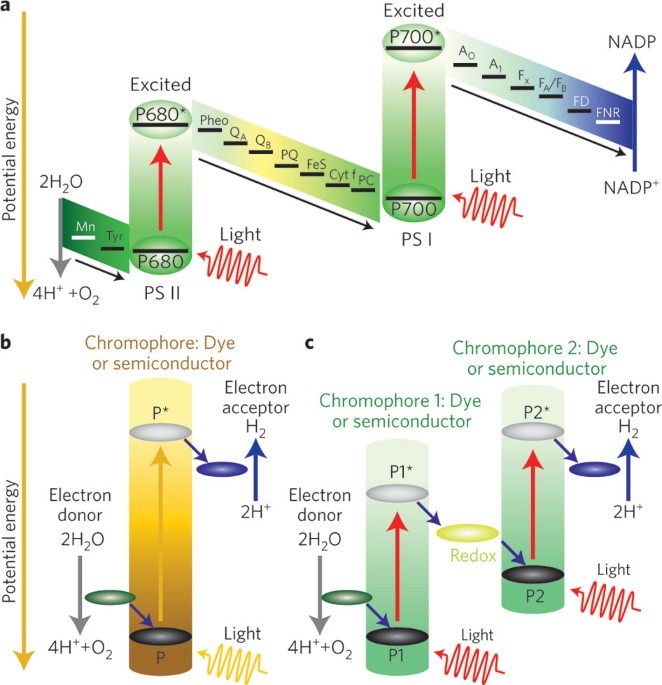
How artificial leaves mimic natural photosynthesis to produce clean energy.
How Artificial Leaves Mimic Photosynthesis
In nature, green plants absorb sunlight using chlorophyll. They convert light energy into chemical energy that fuels growth. Artificial leaves replicate this process, but instead of producing sugars, they generate hydrogen fuel. Hydrogen serves as a clean and versatile energy carrier.
An artificial leaf is a thin, wafer-like device made from light-absorbing semiconductor materials. These materials include silicon, metal oxides, or other advanced compounds. Scientists select them because they capture sunlight efficiently. When sunlight strikes the surface, the semiconductor absorbs photons. This process creates energized electrons that drive chemical reactions on the device.
Water Splitting and Catalysts
Water splitting lies at the core of artificial leaf technology. Scientists also call this process solar-driven electrolysis. The device sits in water, and sunlight activates catalysts on its surface. These catalysts trigger reactions that split water molecules into oxygen and hydrogen.
On one side of the artificial leaf, water molecules release oxygen gas through oxidation. On the other side, hydrogen ions combine to form hydrogen gas. To improve efficiency and reduce cost, researchers use catalysts made from abundant materials such as nickel, cobalt, iron, and phosphorus. These materials replace expensive precious metals like platinum.
This ability to split water using only sunlight makes artificial leaf technology especially attractive as a renewable energy solution.

Green leaves capturing sunlight, the foundation of natural photosynthesis.
Hydrogen as Clean Energy Storage
Energy storage remains a major challenge for renewable sources such as solar and wind power. The sun does not shine continuously, and energy supply often fluctuates. Artificial leaves help address this issue by producing hydrogen, which stores energy in chemical form.
Hydrogen gas can be stored in tanks and later used in fuel cells. Inside a fuel cell, hydrogen reacts with oxygen from the air to generate electricity. This reaction produces only water as a by-product, making fuel cells a highly clean energy system.
Industries already use fuel cells in forklifts, buses, passenger vehicles, trains, boats, and submarines. Unlike batteries, fuel cells do not require recharging. They continue to produce electricity as long as hydrogen and oxygen remain available.
Environmental and Global Impact
Artificial leaf technology offers significant environmental benefits. It uses sunlight and water, two of Earth’s most abundant resources. As a result, it can produce fuel without carbon emissions, air pollution, or toxic waste. This feature makes the technology especially useful for regions with limited access to reliable electricity.
Artificial leaves could also support local hydrogen production in remote areas. This approach reduces dependence on fossil fuels and long-distance energy transport. On a global scale, the technology could support efforts to cut greenhouse gas emissions and build a low-carbon energy economy.
Current Challenges and Future Potential
Despite its promise, artificial leaf technology remains in the experimental and early commercial research stages. Scientists continue to improve efficiency, durability, safety, and scalability. They must still address challenges such as catalyst stability, hydrogen storage, and system cost.
Even so, ongoing research suggests that artificial leaves could play an important role in future energy systems. By combining sunlight, water, and smart materials, this technology shows how nature-inspired engineering can help meet the world’s growing energy needs sustainably.
Conclusion
Artificial leaf technology highlights how scientists can apply lessons from nature to solve modern energy challenges. By using sunlight and water to produce clean hydrogen fuel, it supports both renewable energy generation and storage. Although large-scale use will take time, continued innovation could help reduce carbon emissions and support a more sustainable energy future. PRIME









Leave A Comment