

Seasonal Insights
Ramadan Fasting Health Tips: How to Stay Energised and Well

Ramadan Fasting Challenges
Time of Reflection — and Physical Adjustment
Ramadan fasting health tips can help support your body as you adjust to fasting from dawn to sunset. While Ramadan is a spiritually significant time for Muslims, the changes in eating, hydration, and sleep patterns can affect your energy levels and overall wellbeing. Understanding how your body responds can help you stay energised and well throughout the month.
Understanding these changes—and knowing how to support your health—can help you stay energised and well throughout the month.
What Happens to Your Body During Fasting?
When you fast for extended hours, your body shifts how it uses energy:
-
Blood sugar levels drop, especially in the late afternoon
-
The body begins to use stored fat for energy
-
Hydration levels decrease, particularly in hot climates like Singapore
-
Your metabolism adapts, becoming more efficient over time
While many people adjust well, others may experience temporary symptoms such as fatigue, headaches, or irritability—especially in the first few days. These Ramadan fasting health tips can help reduce fatigue and support better energy levels.
Common Challenges During Ramadan
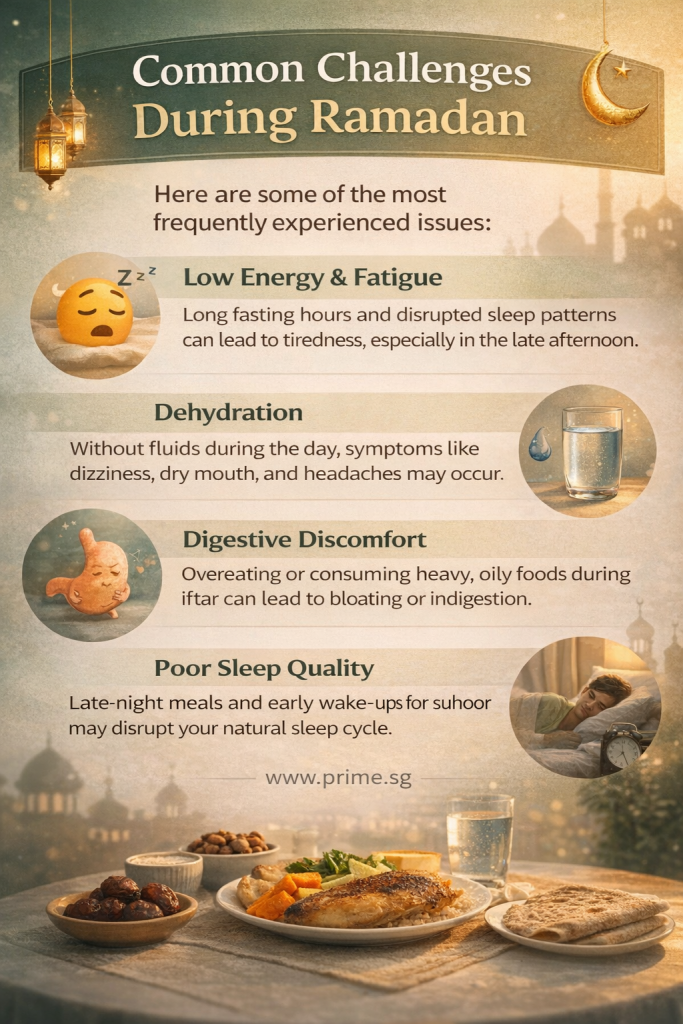
Ramadan fasting health challenges infographic.
Here are some of the most frequently experienced issues:
😴 Low Energy & Fatigue
Long fasting hours and disrupted sleep patterns can lead to tiredness, especially in the late afternoon.
💧 Dehydration
Without fluids during the day, symptoms like dizziness, dry mouth, and headaches may occur.
🍽️ Digestive Discomfort
Overeating or consuming heavy, oily foods during iftar can lead to bloating or indigestion.
🌙 Poor Sleep Quality
Late-night meals and early wake-ups for suhoor may disrupt your natural sleep cycle.
Ramadan Fasting Health Tips for Suhoor and Iftar
A clean table with oats, eggs, yogurt, nuts, dates, and water in soft morning light.
What—and how—you eat can make a big difference in how you feel throughout the day.
Suhoor (Pre-Dawn Meal)
Focus on foods that provide slow, sustained energy:
-
Whole grains (oats, wholemeal bread)
-
Protein (eggs, yogurt, tofu)
-
Healthy fats (nuts, avocado)
💡 Tip: Avoid overly salty foods—they can increase thirst during the day.
Iftar (Breaking Fast)

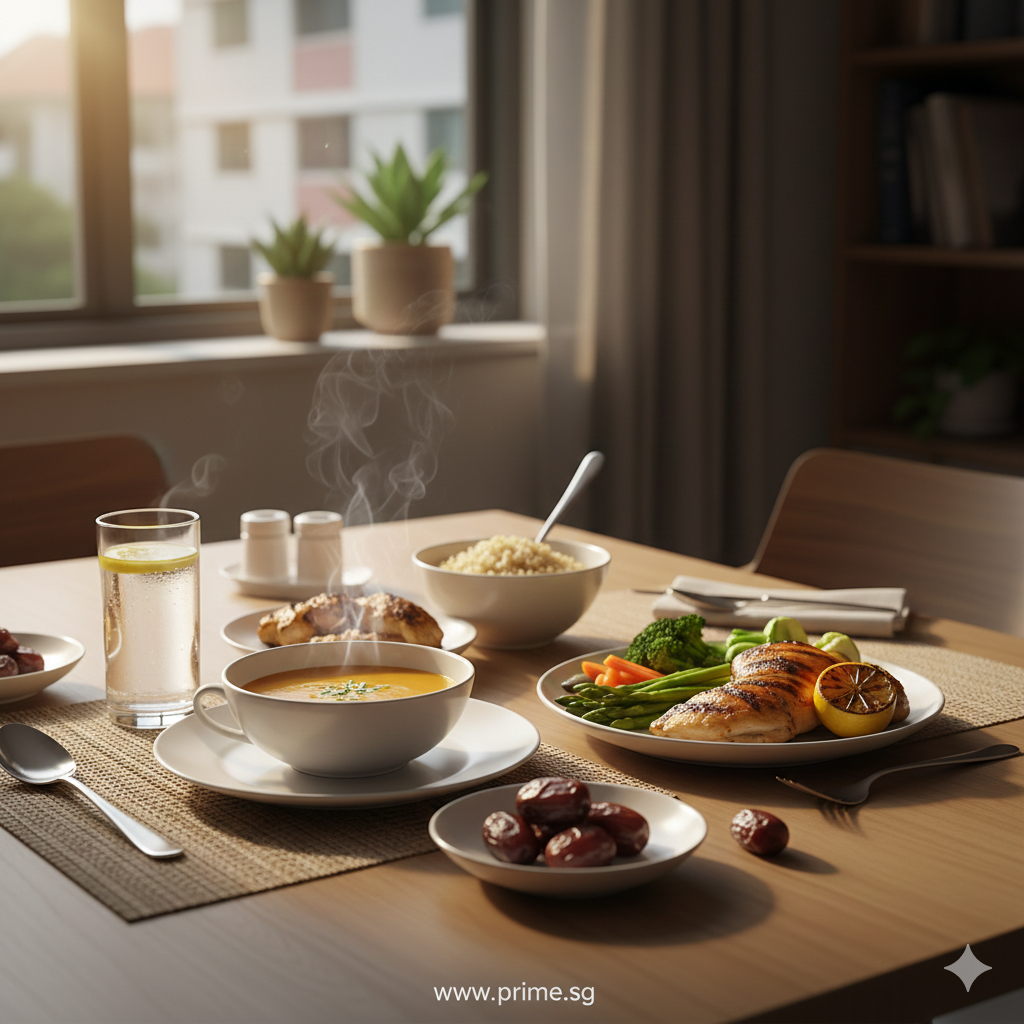
Dates, water, soup, vegetables and grilled protein — not overloaded.
Start gently and avoid overloading your system:
- Begin with water and light foods (e.g. dates, soup)
-
Follow with a balanced meal (carbs + protein + vegetables)
-
Limit deep-fried and sugary foods to prevent energy crashes
💡 Tip: Eating too quickly can strain digestion—pace yourself.
Hydration: The Overlooked Key
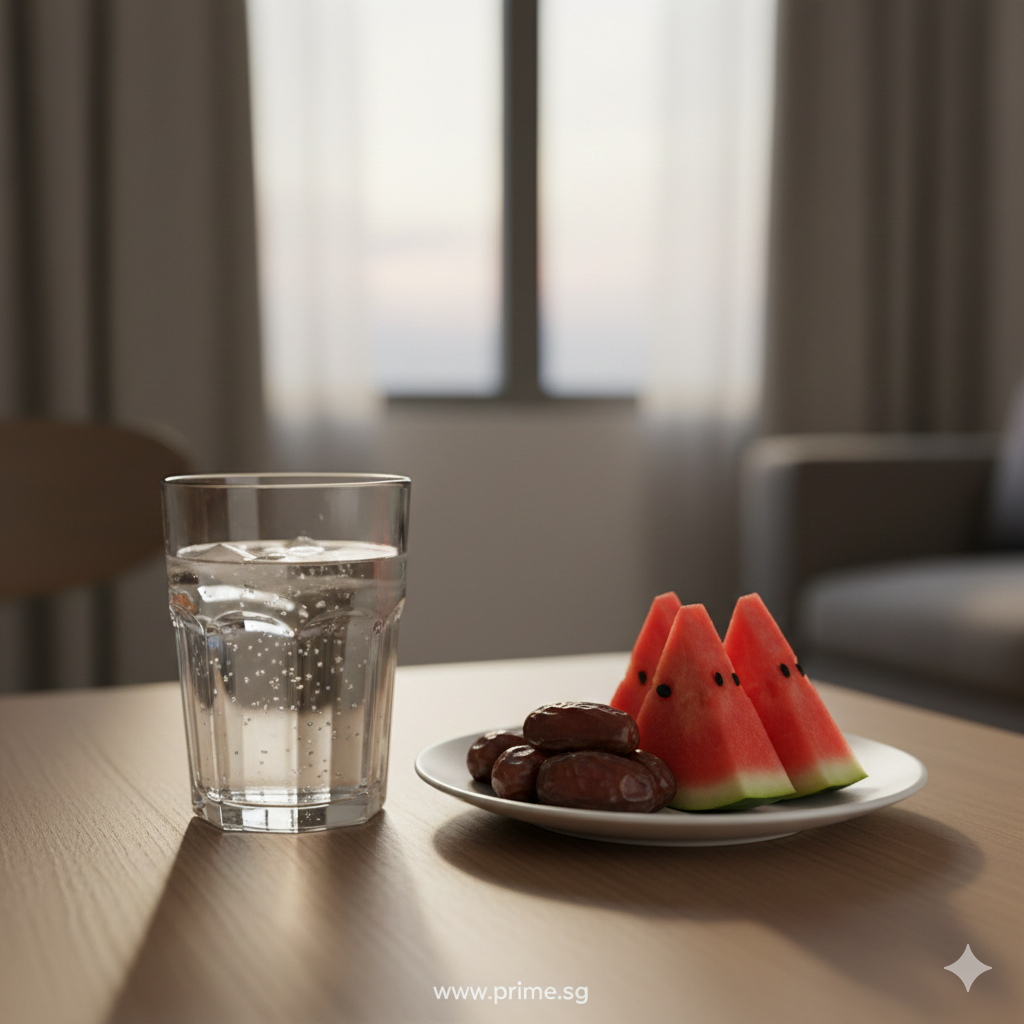
Glass of water beside dates and fruit at sunset.
Since you can’t drink during the day, hydration needs to be intentional.
Try:
-
Drinking small amounts regularly between iftar and suhoor
-
Including water-rich foods like fruits and vegetables
-
Reducing caffeine, which can increase fluid loss
A good goal is to replenish steadily, not all at once.
Managing Sleep and Energy

Person resting quietly or taking a short nap in soft evening light.
Ramadan often shifts your daily rhythm—but small adjustments can help:
-
Take short naps (20–30 minutes) if needed
-
Try to maintain a consistent sleep schedule
-
Avoid heavy meals right before bed
Listen to your body—rest is part of sustaining your energy.
Who Should Take Extra Care?
While many people fast safely, some individuals may need to take additional precautions, including those with:
-
Diabetes
-
Chronic medical conditions
-
Pregnancy
-
Older Adults
If you have a medical condition, it’s advisable to seek medical advice on how to fast safely.
A Balanced Approach to Fasting
Ramadan is both a spiritual and physical journey. By making mindful choices around nutrition, hydration, and rest, you can better support your body while observing the fast.
Small adjustments can go a long way in helping you feel more energised, focused, and well throughout the month.
Final Thought
Fasting is a deeply personal and meaningful practice. Supporting your health during this time isn’t about changing the experience—it’s about sustaining it in a way that allows you to fully engage, both physically and spiritually. PRIME









Leave A Comment