

Orthopaedic Health Series

Scoliosis progression varies greatly between individuals, making personalised assessment essential.
Why Some Scoliosis Curves Progress While Others Remain Stable
by Dr Kevin Lau – ScolioLife®
When a person is diagnosed with scoliosis, one of the first questions they often ask is, “Will the curve get worse?”
Unfortunately, there is no simple answer.
Some scoliosis curves remain relatively stable throughout life, while others may progress significantly during periods of growth or later in adulthood. Understanding why this happens is important because early recognition of progression risk may help patients and families make more informed decisions about monitoring and management.
One of the most common misconceptions about scoliosis is that the degree of the curve alone determines the outcome. Scoliosis is a complex condition influenced by multiple factors including age, growth potential, genetics, curve pattern, posture, muscle balance, and individual biomechanics.
This is why two patients with seemingly similar X-rays can experience very different journeys.
Scoliosis Is More Than Just a Curve
Scoliosis is often described as a sideways curvature of the spine. However, it is actually a three-dimensional condition involving spinal curvature, vertebral rotation, and changes in overall body alignment.
As a result, scoliosis can affect much more than the appearance of the spine. Depending on the severity and location of the curve, it may influence posture, balance, movement efficiency, muscle function, and, in some cases, quality of life.
This complexity is one reason why scoliosis should be assessed as an individual condition rather than simply categorised according to the Cobb angle measured on an X-ray.
Growth Remains One of the Biggest Risk Factors
One of the strongest predictors of progression is growth.
Children and adolescents who are still growing face a greater risk of curve progression than adults whose skeletons have matured. During rapid growth spurts, particularly during puberty, existing spinal curves may increase more quickly.
This is why regular monitoring during growth years is so important. Changes can sometimes occur gradually and without obvious symptoms, making it difficult for parents or patients to recognise progression early.
The younger a child is at diagnosis, the greater the potential for future growth and, therefore, the greater the need for careful observation.
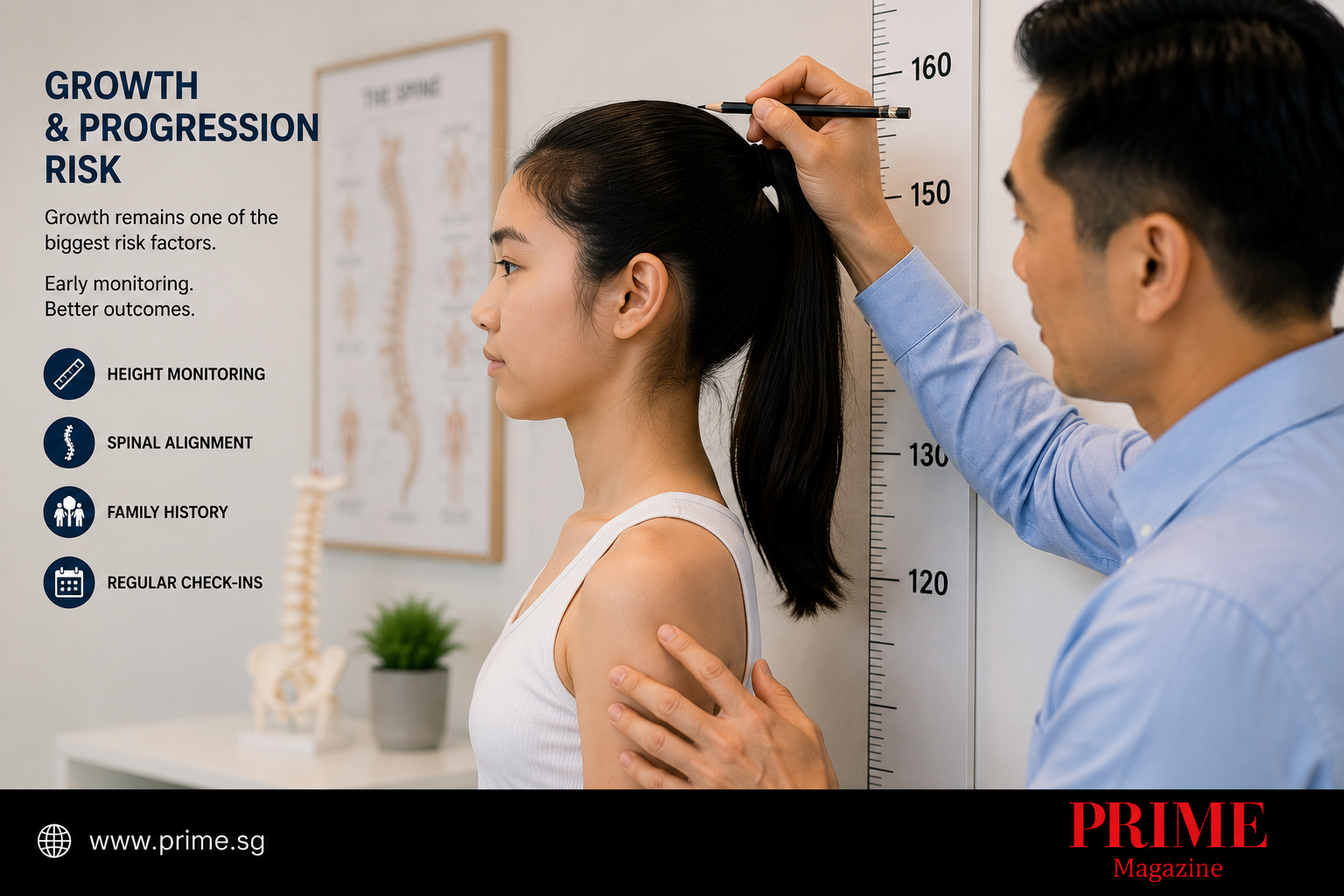
Rapid growth during adolescence remains one of the strongest predictors of scoliosis progression.
Why Waiting May Not Always Be the Best Option
Many families are told to simply “watch and wait” when scoliosis is first detected.
While observation is often appropriate for mild curves, monitoring should not mean ignoring the condition.
A child may continue participating in sports, attending school, and leading a normal life while subtle changes occur within the spine. By the time visible changes become obvious, the curve may already have progressed considerably.
Regular follow-up assessments allow healthcare professionals to track changes over time and determine whether the scoliosis remains stable or shows signs of progression.
The goal is not necessarily to treat every scoliosis curve, but to identify progression early enough to make informed decisions about management when necessary.
The Importance of Personalised Assessment
In clinical practice, no two scoliosis patients are exactly alike.
Two teenagers may both present with a 20-degree curve, yet one may remain stable while the other’s curve progresses significantly over the next few years.
This difference can be influenced by factors such as:
- Growth potential
- Skeletal maturity
- Curve pattern and location
- Family history
- Postural habits
- Muscle imbalances
- Compliance with monitoring or rehabilitation programmes
Because of these variables, scoliosis management should always be tailored to the individual rather than based solely on the degree of curvature.
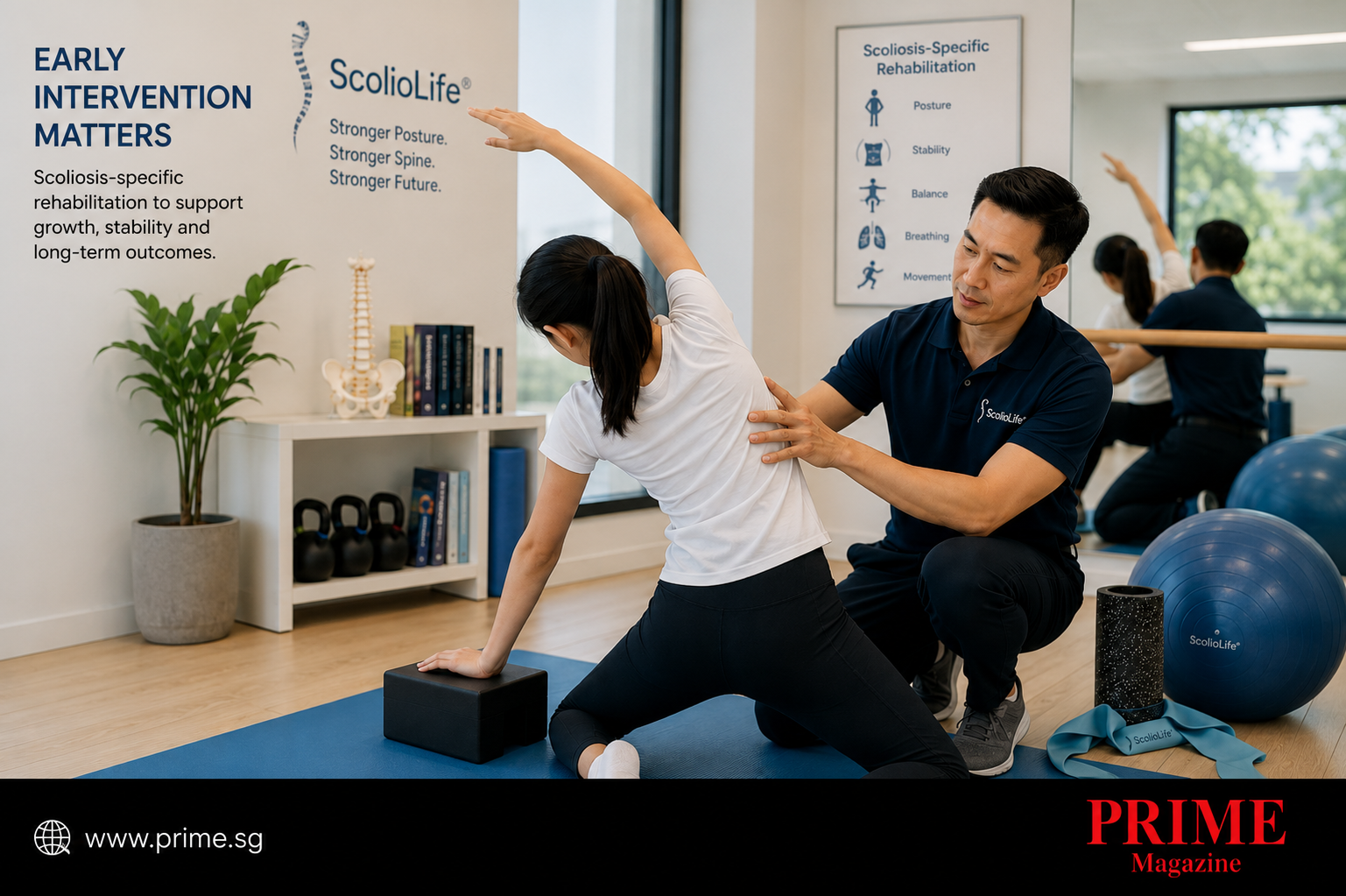
No two scoliosis patients are identical, which is why management should be tailored to the individual.
A Real-World Example
Consider two adolescents diagnosed with similar scoliosis curves.
The first is a 15-year-old who is approaching skeletal maturity. After regular monitoring over several years, the curve remains largely unchanged.
The second is an 11-year-old entering a rapid growth phase. Although the curve initially appears mild, it increases noticeably over the next two years as growth accelerates.
Both patients started with similar measurements, yet their outcomes were very different.
This illustrates why age and growth potential are often just as important as the initial curve size when assessing progression risk.
Can Conservative Management Help?
While no treatment can guarantee that scoliosis progression will stop completely, early detection provides an opportunity to consider appropriate management strategies when required.
Depending on the individual’s age, curve characteristics, growth status, and clinical presentation, conservative approaches may include:
- Regular monitoring
- Bracing such as our ScolioAlign® brace designed for correcting curves
- Scoliosis-specific rehabilitation programmes
- Postural training
- Functional movement and exercise-based strategies
Scoliosis-specific rehabilitation programmes are designed to improve posture awareness, spinal stability, muscular balance, breathing mechanics, and movement control. These programmes are typically customised according to the individual’s curve pattern and treatment goals.
Importantly, successful management often depends not only on the treatment itself but also on patient understanding, participation, and long-term compliance.
The Bottom Line
Some scoliosis curves remain stable for years, while others progress due to a combination of growth, genetics, curve characteristics, and individual biological factors.
Because progression can occur silently during periods of growth, early detection and regular monitoring remain essential.
The most effective approach is not simply focusing on the curve itself but understanding the individual behind the curve. A personalised assessment can help identify risk factors, guide monitoring decisions, and determine whether conservative management strategies may be appropriate.
By recognising the factors that influence scoliosis progression, patients and families can take a more proactive role in protecting long-term spinal health.
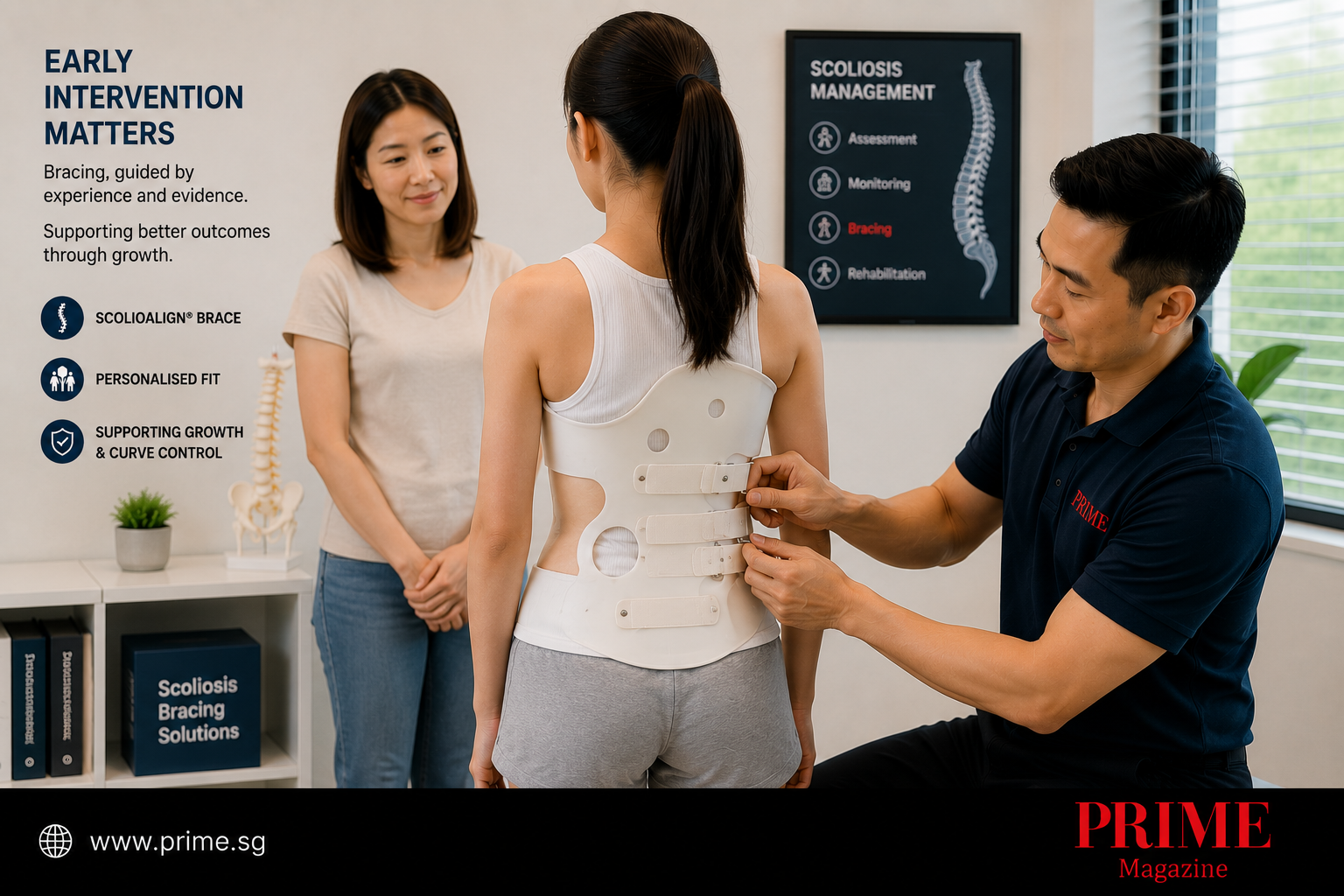
Early detection and appropriate conservative management may help support long-term spinal health.








Leave A Comment