

The Energy & Fatigue Series
Feeling tired all the time? You’re not alone.
PRIME

Tired woman on desk
Feeling tired all the time—even after a full night’s sleep?
You’re not alone. Many people today wake up exhausted, push through the day, and still don’t feel truly rested.
If this sounds familiar, it may not just be “a busy life” or “getting older.”
It could be your body asking for something deeper: renewal.
As Easter approaches—a season often associated with renewal and fresh beginnings—it may be worth asking: what if your body has been trying to reset, but you haven’t been listening?
What “Renewal” Really Means for Your Body

Inflammation vs Balance
In modern wellness culture, a “reset” is often reduced to juice cleanses, detox teas, or quick fixes. But biologically, renewal is far more complex—and far more powerful.
True renewal happens when your body restores balance across key systems:
- Hormones that regulate energy, mood, and metabolism
- Mitochondria, the energy producers in your cells
- Inflammation levels, which affect everything from fatigue to ageing
- Sleep cycles, which determine how well you actually recover

Mitochondria Energy Production
When these systems are out of sync, no amount of rest or supplements will fully restore your energy.
If you’ve been feeling tired all the time, this imbalance may already be happening beneath the surface.
5 Signs You’re Feeling Tired All the Time (And Why It Matters)
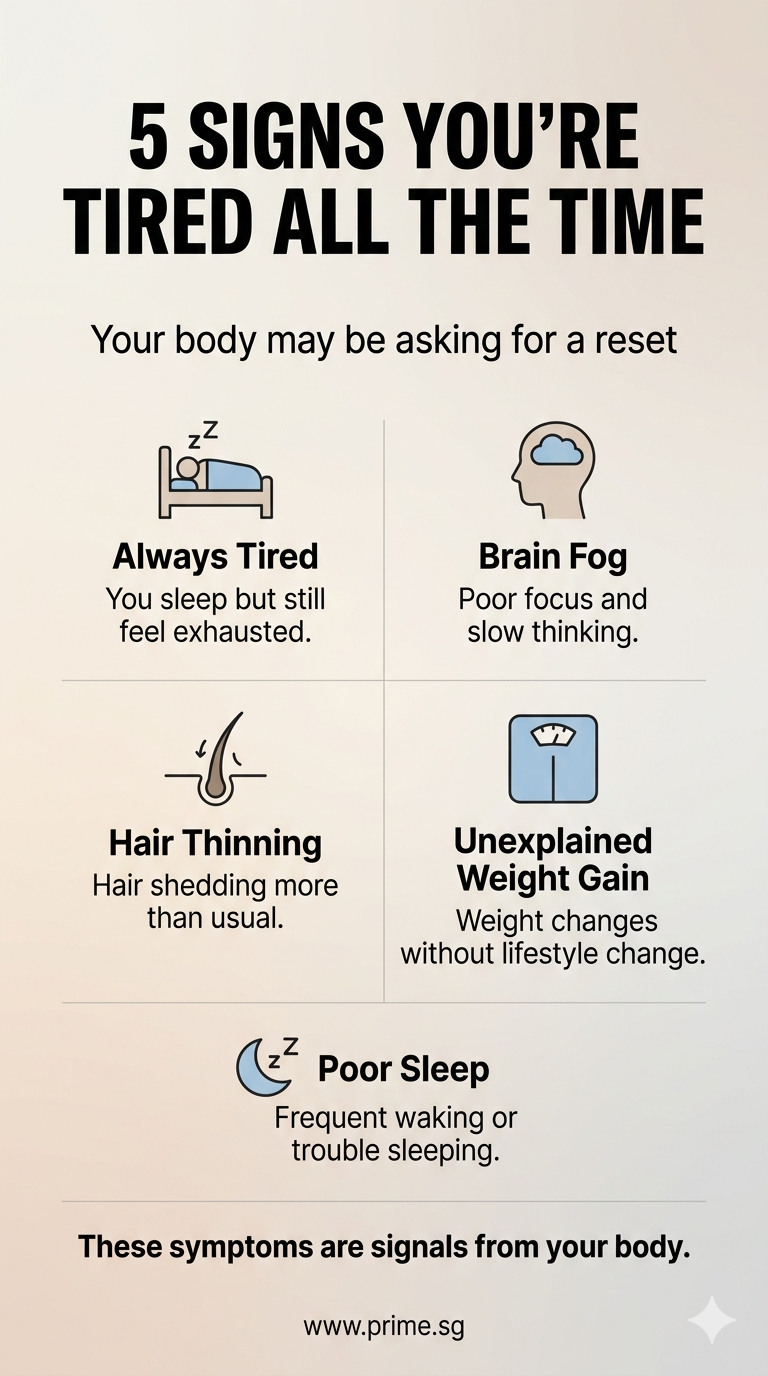
Many people ignore early warning signs, assuming they’re just part of modern life. But persistent symptoms often point to deeper imbalances.
1. You’re always tired—even after rest
You sleep but never feel refreshed. This could be linked to disrupted sleep cycles, cortisol imbalance, or underlying metabolic issues.
2. Brain fog and poor focus
Struggling to concentrate or feeling mentally “slow” may reflect hormonal shifts, chronic stress, or nutrient deficiencies.
3. Hair thinning or increased shedding
Hair health is closely tied to internal balance. Hormones, stress, and inflammation can all affect the hair growth cycle.
4. Weight gain despite no major changes
If your diet and activity haven’t changed but your weight has, your metabolism or hormones may be shifting.
5. Poor sleep quality
Waking frequently, feeling wired at night, or struggling to fall asleep can signal dysregulated cortisol or melatonin rhythms.
These are not random symptoms—they are signals.
Why You’re Feeling Tired All the Time: What Might Be Going On

Behind persistent fatigue and low energy, there are often identifiable medical or physiological causes.
Some of the most common include:
Hormonal imbalances
Conditions such as thyroid dysfunction, perimenopause, or andropause can significantly impact energy levels, mood, and metabolism.
Chronic stress and cortisol dysregulation
When stress becomes prolonged, cortisol patterns can become disrupted—leaving you tired during the day and alert at night.
Nutrient deficiencies
Low levels of iron, vitamin B12, vitamin D, or magnesium can contribute to fatigue, brain fog, and weakness.
Poor metabolic health
Blood sugar fluctuations and insulin resistance can lead to energy crashes and persistent tiredness.
Gut health issues
Your gut plays a key role in nutrient absorption, inflammation, and even mood regulation.
Understanding the root cause is key—because without it, you may end up treating symptoms rather than solving the problem.
The Real Reset: What Actually Helps

If your body is asking for renewal, the answer isn’t extreme detoxes or quick fixes. It’s about restoring balance through sustainable, science-based habits.
1. Prioritise sleep timing, not just duration
Going to bed at consistent times and aligning with your natural circadian rhythm can significantly improve energy levels.
2. Focus on nutrient density
Instead of restrictive diets, aim for balanced meals with:
- Adequate protein
- Whole foods
- Key micronutrients
This supports both metabolism and hormonal health.
3. Support your gut
A healthy gut improves nutrient absorption and reduces inflammation. Fibre-rich foods, fermented options, and hydration all play a role.
4. Move—without overtraining
Exercise should energise, not exhaust. Chronic overtraining can worsen fatigue and hormonal imbalance.
5. Manage stress intentionally
Stress isn’t just mental—it’s physiological. Techniques such as mindful breathing, proper rest, and boundaries can help regulate cortisol levels.
When to Seek Medical Advice
While lifestyle changes are powerful, persistent symptoms shouldn’t be ignored.
If you’re feeling tired all the time, experiencing unexplained weight changes, hair loss, or poor sleep, it may be time for a medical evaluation.
Blood tests and clinical assessments can help identify underlying issues such as hormonal imbalances, deficiencies, or metabolic concerns.
Early detection allows for targeted treatment—and a faster return to feeling like yourself again.
Easter, Redefined

Easter is often associated with renewal, but in today’s world, it can easily become just another long weekend—filled with indulgence, social plans, and little real rest.
But what if you used this season differently?
Not as a break from your routine—but as a pause to listen to your body.
Because renewal isn’t something that happens once a year.
It’s something your body has been asking for—perhaps quietly, perhaps persistently—for some time now.
A Gentle Reset Starts with Awareness

If you’ve been feeling tired all the time, foggy, or out of sync, don’t dismiss it.
Your body is remarkably good at signalling when something isn’t right.
This Easter, instead of pushing through the fatigue, consider this:
What if your tiredness isn’t a weakness—but a message?
And what if listening to it is the first step toward true renewal? PRIME










Leave A Comment