
Eye Health Series
Healthy Eyes at Every Age | Common Visual Conditions in Midlife and Beyond (Part 2)
by Dr Khor Wei Boon – Singapore Eye & Vision

Healthy eyes at every age. In Part 2, Dr Khor Wei Boon explains how vision changes from midlife onwards and why regular eye checks matter.
In our previous article, we explored the eye conditions commonly seen in children and young adults. This time, we look at the eye problems that can affect the middle-aged and beyond. For most of us, vision in our early adulthood is constant and stable. So, it can be alarming when our eyesight starts to change as we enter our 40s. While some changes are normal and should be expected, others may signal a more serious condition that requires monitoring or treatment.
Midlife Changes in the 40s and 50s
This is the stage of life where regular eye examinations become important, particularly for individuals with diabetes, high myopia or a family history of eye disease. Although visual changes in midlife are common, not every symptom should be attributed to “getting older”.
Presbyopia
For many of us, the first signs of ageing appear when we try to read a text message or a restaurant menu. One day, we may suddenly find that the words seem just a little blurrier than before, the lighting in our favourite restaurant suddenly feels too dim, or our arms somehow seem too short to view our mobile phone screen comfortably. These are all signs of presbyopia.
Presbyopia is not a disease. It is a normal part of ageing and affects everyone, even people who have never worn glasses before. Our natural lens is what allows us to switch our point of focus smoothly from far to near. In our younger years, our lenses are transparent and flexible, and tiny muscles around the lens enables it to change its shape. These minute changes in shape are what allows the eye to focus up close. But over time the lens becomes stiffer and the muscles weaken, resulting in the gradual loss of our near vision.
Common symptoms of presbyopia include:
- Difficulty reading small print.
- Holding reading materials or mobile phones at arm’s length.
- Eye strain with long periods of close work.
- Needing brighter lighting for reading.
Glasses remain the simplest option, whether it is progressive glasses or dedicated reading glasses. Multifocal contact lenses are also available for those who prefer not to wear glasses. Refractive surgery such as LASIK does not make the lenses or the eye muscles work harder, but they can occasionally be performed in selected patients to improve the range of vision.
Menopause and the Female Eye
Most women are aware of the common symptoms of menopause, such as hot flushes, sleep disturbances and mood changes. What many do not realise is that menopause can also affect the eyes!
One of the most common consequences is dry eye disease. The eyes rely on a delicate balance of hormones to maintain healthy tear production. As levels of oestrogen and other hormones fluctuate and eventually decline, tear production by the tear glands can begin to fall. Special oil glands along our eyelids also secrete oils that contribute to a healthy tear layer. Menopause can alter the quality of the oil secretions from these meibomian glands, disrupting the tears even further.
The effects can extend beyond simple discomfort. Some women may find that their vision appears clear one moment and blurry the next, particularly towards the end of the day. This can make it difficult to read, use the computer or to drive.
Women may experience some of the following eye symptoms:
- Dryness, irritation or a burning sensation.
- Increased sensitivity to light.
- Fluctuating vision during the day.
- Greater discomfort with contact lens wear.
- Excessive tearing when the eyes are uncomfortable.
The first step is to receive a comprehensive eye examination, in order to exclude serious disease such as cataracts. While we cannot reverse the hormonal changes brought on by menopause, dry eye disease is treatable. Lubricating eye drops, warm compresses, treatment of meibomian gland problems and newer topical medications can all provide comfort and relief.
Protecting Long Term Sight in Our 60s and Beyond
As we grow into our 60s and beyond, age-related eye diseases become increasingly common. These conditions can permanently affect vision if left untreated. Fortunately, advances in modern eye care have dramatically improved our ability to manage many of these diseases, especially if they are detected early.
Cataracts
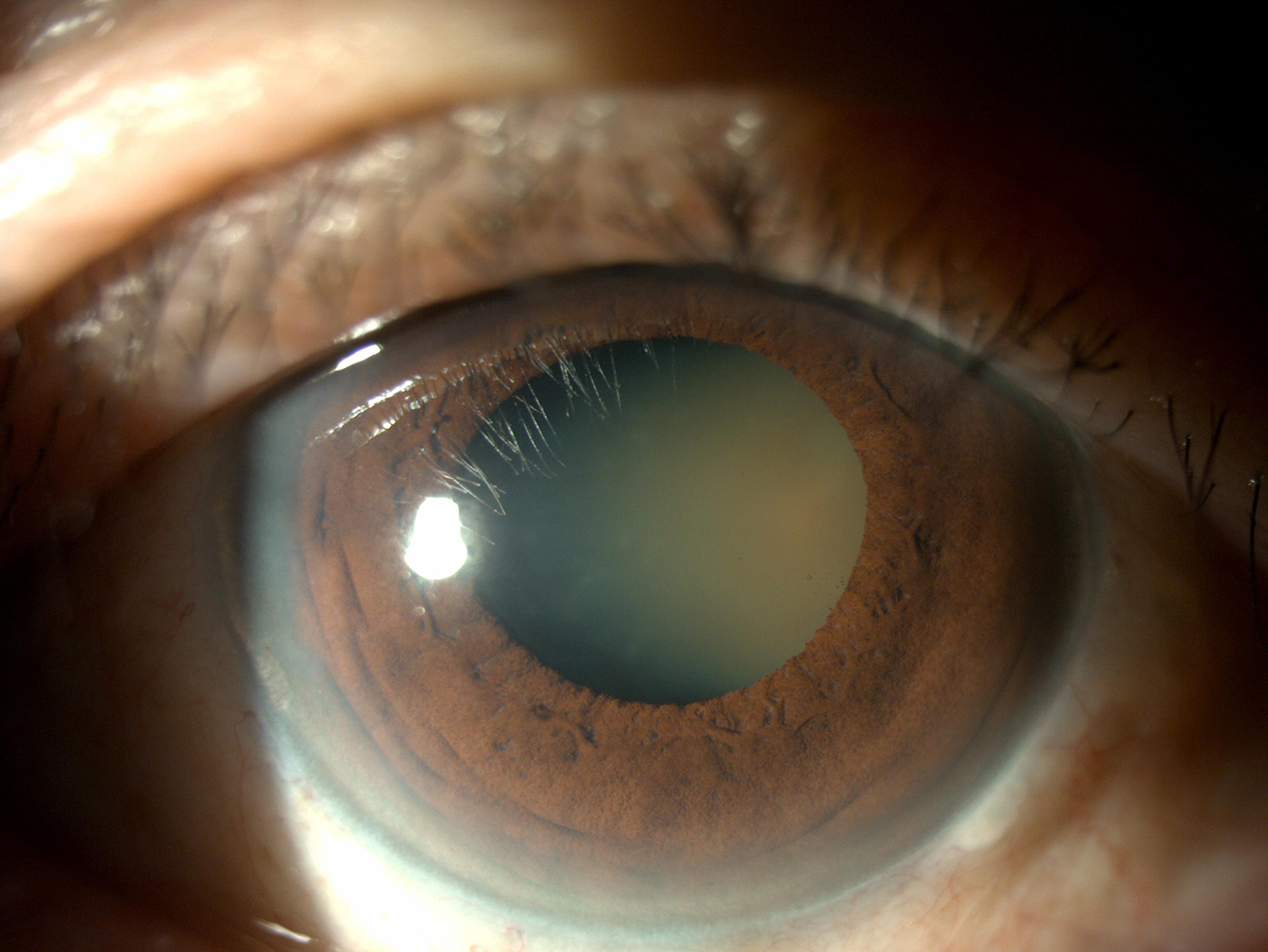
A cataract clouds the eye’s natural lens, which can make vision appear blurred or hazy.
Cataracts are the most common eye condition associated with ageing. A cataract is a gradual clouding of the eye’s natural lens. Think of it like a window that has become frosted or fogged up, making it harder to see clearly through them. Most cataracts develop due to age, but other causes include poorly-controlled diabetes, long-term steroid use and injury to the eye.
Common symptoms to watch for include:
- Frequent changes in the prescription of your glasses/contact lenses.
- Blurred or misty vision that cannot be corrected with glasses.
- Difficulty seeing in low light or at night.
- Increased sensitivity to bright light and glare.
- Colours appearing faded or having a yellow tint.
Cataracts usually develop slowly over many months or years. In the early stages, new spectacles may help. However, surgery will be needed as the cataract inevitably worsens and begins to interfere with work, driving and daily activities. The good news is that cataract surgery is among the safest and most successful surgeries performed today, allowing you to regain good vision and maintain your independence.
Glaucoma
Glaucoma is a group of eye conditions that damage the optic nerve – the “cable” that carries visual information from your eye to your brain. This damage is often, but not always, related to high pressures inside the eye. Over time, glaucoma can slowly shrink your side (peripheral) vision, before affecting the central vision. Most people do not notice symptoms until the disease is advanced, which is why glaucoma is often called the “silent thief of sight”.
Damage to the optic nerve is irreversible, which makes glaucoma one of the leading causes of blindness worldwide. Early diagnosis and proper treatment are essential for you to preserve your vision. Risk factors for glaucoma include:
- Increasing age.
- A family history of glaucoma.
- High myopia.
- Diabetes.
Glaucoma is often silent and painless, which is why regular eye examinations are the most effective means of early detection. While vision already lost to glaucoma cannot be reversed, modern treatments can often slow or stop further progression if the disease is identified early enough.
Age-Related Macular Degeneration
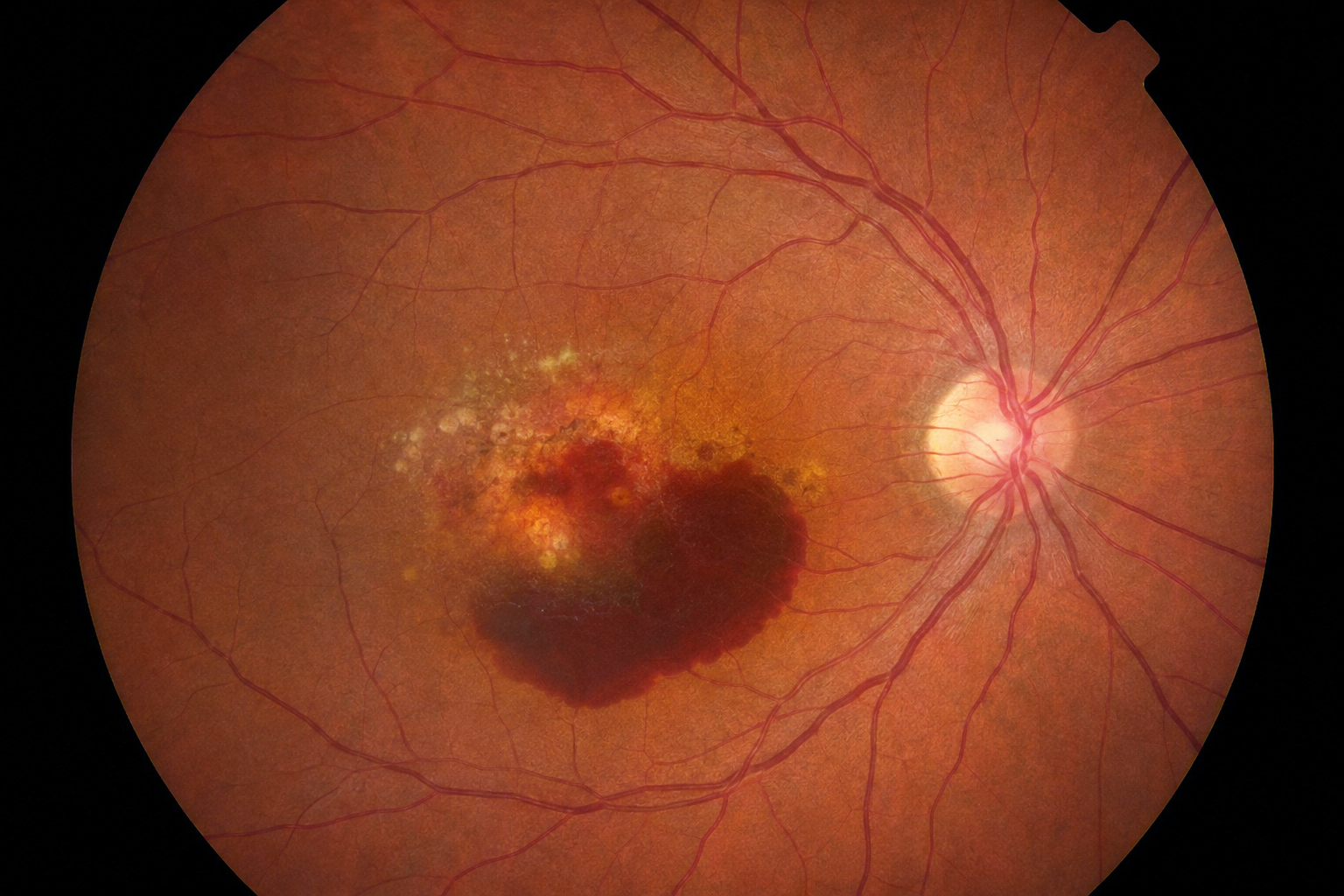
A retinal photograph showing bleeding near the macula in wet age-related macular degeneration (AMD). The macula is the part of the retina responsible for sharp central vision.
Age-related Macular Degeneration (AMD) is a leading cause of vision loss among people aged 50 and older. It results in degeneration (dry AMD) or bleeding (wet AMD) of the macula, a small spot near the centre of the retina. The macula allows us to see objects that are straight ahead, and is crucial for the sharp, central vision required in activities such as reading and driving.
Age is the most important risk factor, but smoking significantly increases the likelihood of developing the disease compared to non-smokers. Individuals with a family history of AMD are at a higher risk, while obesity, high blood pressure and heart disease have all been associated with AMD. Conversely, smoking cessation and a healthy diet that is high in antioxidants can lower your risk.
Symptoms may include:
- Blurred central vision, with difficulty reading or seeing fine details.
- Straight lines, such as door frames or lines of text, may appear wavy, bent or distorted.
- Dark patches in your field of vision can cause you to not recognise faces.
Many people fear AMD because it can affect activities of daily life and limit our independence. Fortunately, treatment options for certain forms of AMD have improved dramatically over the past two decades, particularly when the condition is detected early.
Conclusion
Ageing affects every part of the body, and the eyes are no exception. In our 40s and 50s, we often notice the first signs of change due to presbyopia and menopause. In our 60s and beyond, conditions such as cataracts, glaucoma and AMD become increasingly important.
The encouraging news is that many eye conditions can be treated effectively or managed successfully when detected early. By staying informed and making regular eye examinations part of your healthcare routine, you can give yourself the best chance of maintaining clear vision and your independence for years to come. PRIME
You Might Also Like:
 Eat Your Way to Better Vision 👀 | Dr. Khor’s Top 5 Foods for Healthy Eyes
 Our New Year’s Resolution: A Better Vision by Dr Khor Wei Boon
 Prime Snippets: Blood Pressure Variability linked To Accelerated Vision Loss In Glaucoma
 Stress and the Eyes: How Modern Life Can Affect Our Vision (Part 1) By Dr Khor Wei Boon
 Seeing Stress | Stress and the Eyes: How Modern Life Can Affect Our Vision (Part 2) by Dr Khor Wei Boon












Leave A Comment