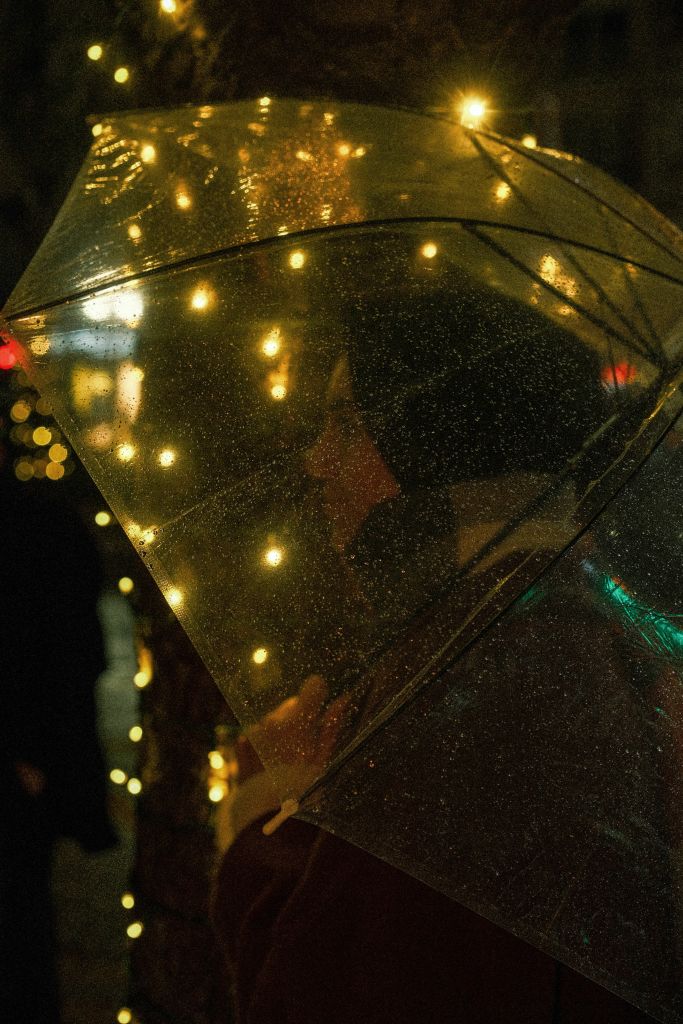
Person under a transparent umbrella with city lights in the rain at night.
Holiday loneliness often hides in plain sight during the festive season. Shopping malls glow with bright lights, holiday songs loop endlessly, and crowds gather in celebration — yet many people experience a deep sense of emotional isolation beneath the surface.
It is no surprise that the holiday season is often described as the most wonderful time of the year. It is a time of gifts, shared meals, and heartfelt reunions. Yet beneath the glitter lies a quieter, less photographed reality: loneliness. For many people, the end-of-year holidays feel less like celebration and more like a magnification of absence — of people, purpose, and belonging. What is meant to be a season of connection can instead become a season of longing.
The Paradox of Togetherness
Loneliness often peaks during periods that emphasise connection. The holidays promise warmth and companionship, but for those who are alone — by circumstance or by choice — the gap between expectation and reality can feel painfully sharp.
Psychologists describe this as the social comparison effect. People instinctively evaluate their own lives against those of others. During the holidays, this tendency intensifies due to cultural expectations and the pervasive influence of social media. Constant exposure to curated images of joy can trigger stress, anxiety, and feelings of inadequacy. When every advertisement, film, and post tells a story of laughter and love, silence becomes harder to ignore.
If you have ever felt lonely during the festive season, know that you are far from alone. A 2022 survey found that 55% of Americans experienced loneliness during the holidays. Members of the LGBTQ+ community, Gen Z adults, and single individuals were especially affected. In fact, 76% of LGBTQ+ respondents reported feeling lonely during year-end festivities, along with 75% of Gen Z adults and 65% of single adults.
Loneliness Across Age Groups in Singapore
While recent local data is limited, earlier studies offer insight. A 2017 survey examining the behaviours and needs of adults aged 60 and above found that about one-third reported feeling lonely during the holiday season. A 2019 study similarly showed that one in three Singaporeans in this age group felt somewhat or mostly lonely.
However, loneliness is not simply about being alone. Solitude can be nourishing and restorative. The problem arises when isolation is involuntary — when it feels imposed rather than chosen.
Findings from Harvard’s Study of Adult Development, one of the world’s longest-running longitudinal studies, reveal that loneliness predicts early mortality more strongly than smoking or obesity. Prolonged social disconnection raises blood pressure, alters immune function, and affects brain regions involved in empathy and learning.
Why the Holidays Hurt More

Lonely man spending Christmas alone.
For those experiencing holiday loneliness, festive rituals can become painful reminders of absence rather than moments of joy. The festive season amplifies emotional contrast. Those who are content may feel happier, but those who are struggling often feel worse. Holiday rituals — gift exchanges, group gatherings, shared meals — can become reminders of what is missing.
For individuals who have recently lost a loved one, gone through a breakup, or relocated to a new city or country, each declined invitation or unanswered message reinforces a sense of exclusion.
Much of this pain stems from holiday mythology. Society promotes an idealised image of togetherness: full tables, effortless joy, and seamless family bonds. Reality is messier. Families argue. Gatherings feel awkward. Relationships strain under expectations. These imperfections are rarely shown, leaving people to believe that their loneliness is abnormal when it is deeply human.
Loneliness in a Dense, Connected City
In Singapore and other urban environments, loneliness takes on a distinct form. The city is crowded and energetic, yet it is easy to feel invisible. Long work hours, high living costs, and transient social circles make emotional intimacy harder to sustain.
While many older adults experience loneliness during the holidays, surveys also show that nearly half of Singapore residents report feeling lonely at least occasionally. Younger adults are among the most affected. Digital connection has not replaced traditional community; it has simply made disconnection easier to mask.
The Science of Loneliness
Loneliness is not just emotional. It is biological. Like hunger or thirst, it signals a threat to survival. The brain processes social rejection using the same regions associated with physical pain, which explains why loneliness can feel visceral.
Over time, chronic loneliness reshapes behaviour. Social skills decline. People become hyper-vigilant to rejection and misinterpret neutral interactions as negative. This creates a self-perpetuating cycle — often called the loneliness loop — where withdrawal deepens isolation.
The holidays can accelerate this loop. Anticipated disappointment leads some to withdraw pre-emptively, while others avoid vulnerability altogether.
The Many Faces of Loneliness
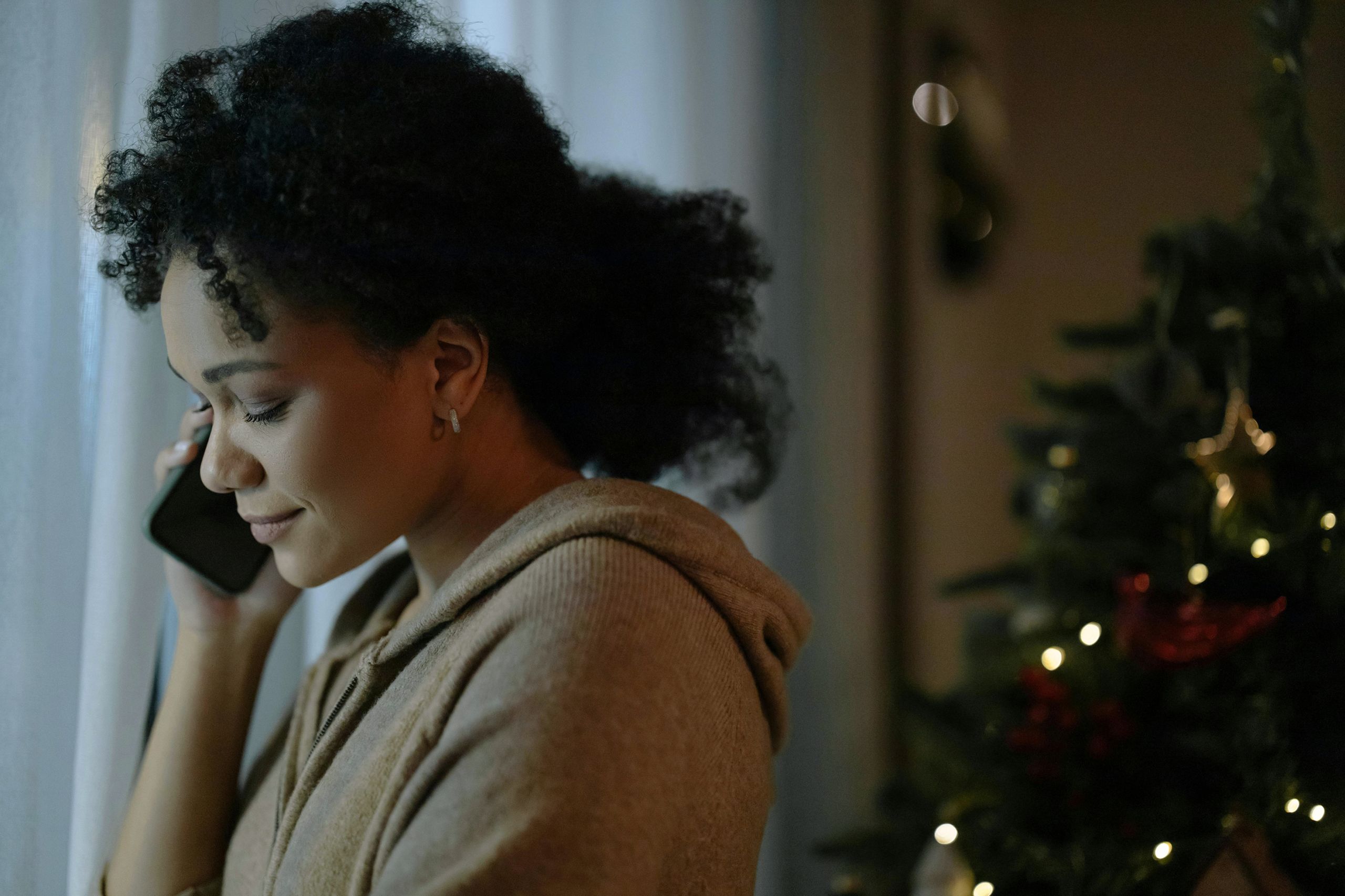
Woman standing alone by a window on Christmas night, reflecting on loneliness.
Loneliness does not always look the same. It may appear as an older adult sitting quietly on a bus, an expatriate scrolling through family photos in a café, or a retail worker wishing customers “Happy Holidays” while spending the season alone.
Social scientists identify three forms of loneliness:
-
Emotional loneliness — absence of a close bond
-
Social loneliness — lack of a broader community
-
Existential loneliness — loss of meaning or purpose
The holidays can trigger all three at once, especially during periods of reflection and transition.
Post-Holiday Loneliness

Woman sitting alone at home during Christmas, quietly drinking by the tree.
Loneliness often intensifies after the holidays. Decorations come down. Routines resume. The emotional contrast can leave a hollow quiet behind.
Studies have shown that psychiatric admissions and self-harm behaviours decrease during major holidays but rebound afterward. Common post-holiday emotions include emptiness, guilt, social withdrawal, and a renewed sense of loss — particularly for those living alone or grieving. The emotional crash after celebrations often deepens holiday loneliness, especially for people who live alone or are grieving.
Connection as Medicine

Even surrounded by lights, the holidays can feel heavy when you’re alone.
If loneliness is a biological signal, connection is its remedy. Connection does not require grand gestures. It begins with small acts: greeting a neighbour, calling a friend, or volunteering time.
Reducing social media use and prioritising real conversations can significantly improve mood. Volunteering, in particular, has been shown to reduce loneliness by shifting focus outward.
In Singapore, community initiatives — befriender programmes, neighbourhood groups, and inclusive celebrations — aim to support social health. Still, connection ultimately requires individual courage and vulnerability.
Healthy Ways to Cope
Redefining celebration can help. Meaning does not require crowds. It may come from quiet rituals, creative pursuits, or intentional solitude.
Helpful strategies include:
-
Regular exercise
-
Spending time in green spaces
-
Eating well and sleeping enough
-
Maintaining routines
-
Practising mindfulness or meditation
-
Engaging in hobbies and humour
Intentional solitude can be empowering when chosen with care.
When Loneliness Becomes Depression
Persistent loneliness can evolve into depression. Warning signs include loss of interest, fatigue, appetite changes, and feelings of worthlessness. These symptoms should not be dismissed as seasonal.
In Singapore, support is available through organisations such as Samaritans of Singapore (SOS), IMH Mental Health Helpline, and Silver Ribbon. Seeking help is an act of self-respect, not weakness.
A Season for All Hearts

Quiet loneliness during Christmas at home.
The holidays do not belong only to the joyful. They belong to those grieving, healing, and rebuilding. They belong to anyone who longs to be seen.
If you are struggling, know that your experience matters. And if you are doing well, remember that warmth shared can become someone else’s lifeline.
At their heart, the holidays are about humanity — about noticing one another, reaching out, and choosing connection, even in the quietest moments. PRIME








Leave A Comment