


How to start Swedish death cleaning
Living well is often about making space — not just in our schedules, but in our homes and our minds. As we move through different stages of life, many of us begin to reflect on what we truly need, what we value, and what we are ready to let go of.
This quiet shift is at the heart of Swedish death cleaning, a Scandinavian approach to decluttering that focuses not on loss, but on clarity, intention, and care for those we love.
Yet the importance of this practice often becomes clear only later. When a loved one passes on, it is rarely the big decisions that feel the heaviest — but the small ones. Old letters tucked into drawers. Stacks of papers whose purpose is no longer clear. Clothes no one remembers buying, yet no one feels ready to throw away.
Sorting through a lifetime of belongings can be an emotional and overwhelming task. It is in these moments that many families begin to understand how deeply objects can carry memories, responsibility, and unspoken meaning.
What Is Swedish Death Cleaning — Really?
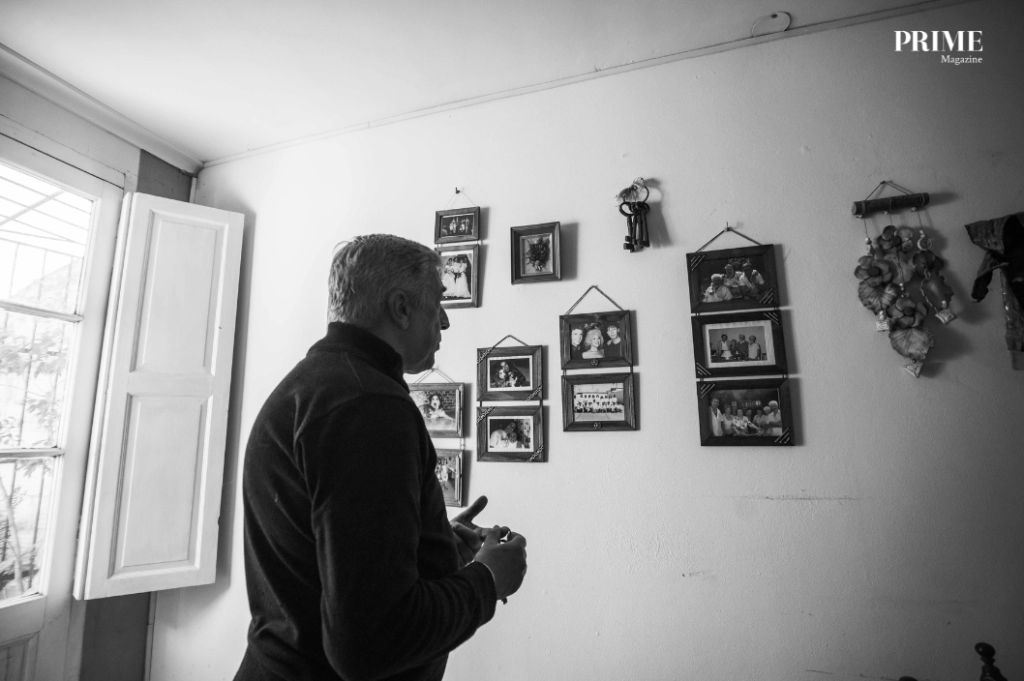
Man Reflecting on Family Memories in Black and White
Swedish death cleaning comes from the Swedish concept of döstädning, which loosely translates to “death cleaning”. Despite its confronting name, the practice is not about preparing for death in a literal sense.
Instead, it encourages people — often later in life — to gradually declutter their homes while they are still healthy and clear-minded. The aim is to keep what is meaningful, let go of what is no longer needed, and reduce the emotional and practical burden on loved ones in the future.
At its heart, Swedish death cleaning is about intention. It asks a simple but powerful question: If someone else had to sort through this one day, would I want them to make this decision for me?
Why Letting Go Can Be So Difficult

Letter Envelopes
Many of us hold on to possessions for reasons that go far beyond practicality. Objects can represent memories, identity, sacrifice, or even fear — fear of waste, fear of regret, or fear of losing a part of ourselves.
In Asian families especially, belongings often carry generational significance. Items are kept “just in case”, or out of respect for the past. Letting go can feel like an act of disloyalty, even when the items themselves are no longer used or loved.
Swedish death cleaning does not ask us to erase our memories. Instead, it invites us to honour them more thoughtfully — by choosing which ones truly deserve space in our lives and homes.
Why This Practice Resonates in Singapore Homes

Multi-generational family together at home, symbolising connection and wellbeing.
In Singapore, where living spaces are often compact and families are closely connected, the impact of accumulated belongings can be felt even more strongly. Adult children may find themselves helping ageing parents manage overflowing cupboards, or eventually being left to sort through a home filled with decades of possessions.
During times of grief, having to decide what to keep, donate, or discard can add another layer of emotional strain. Swedish death cleaning offers an alternative — one rooted in kindness, foresight, and care.
By making these decisions ourselves, we give our families something invaluable: clarity.
The Emotional and Mental Health Benefits
Beyond its practical advantages, Swedish death cleaning can be surprisingly freeing on an emotional level. Many people who begin the process describe a sense of lightness, calm, and control.
Letting go of excess can:
-
Reduce anxiety and mental clutter
-
Create a more peaceful living environment
-
Bring a sense of closure to certain life chapters
-
Offer reassurance that affairs are in order
There is comfort in knowing that what remains has been chosen with care — and that one’s story will not be left scattered across forgotten drawers and boxes.
How to Begin — Gently and Without Overwhelm
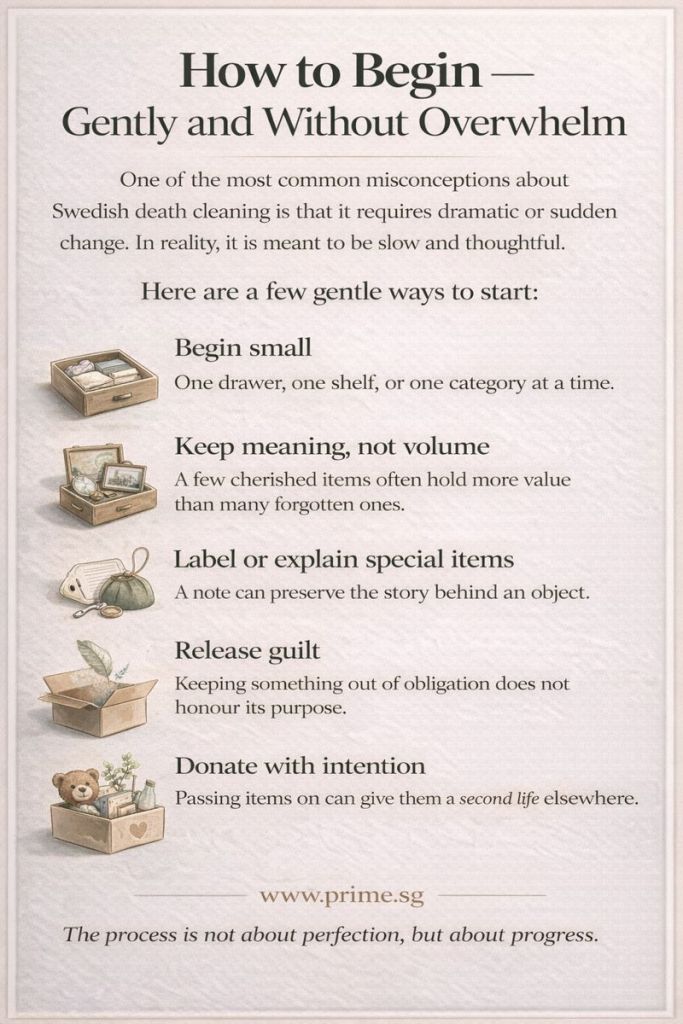
How to start Swedish death cleaning
One of the most common misconceptions about Swedish death cleaning is that it requires dramatic or sudden change. In reality, it is meant to be slow and thoughtful.
Here are a few gentle ways to start:
-
Begin small. One drawer, one shelf, or one category at a time.
-
Keep meaning, not volume. A few cherished items often hold more value than many forgotten ones.
-
Label or explain special items. A note can preserve the story behind an object.
-
Release guilt. Keeping something out of obligation does not honour its purpose.
-
Donate with intention. Passing items on can give them a second life elsewhere.
The process is not about perfection, but about progress.
What Swedish Death Cleaning Is Not
It is equally important to understand what Swedish death cleaning does not mean.
Swedish death cleaning is not about throwing everything away, becoming minimalist, or emotionally detached.
Nor does it mean expecting the end of life.
Instead, it is a quiet act of care — a way of deciding, while we still can, what truly matters.
Rather, it is a quiet act of care — a way of deciding, while we still can, what truly matters.
A Final Thought
Swedish death cleaning reminds us that our belongings tell a story. By choosing which parts of that story to keep, we offer our loved ones something precious: not just a lighter load, but a clearer understanding of who we were and what we valued.
Perhaps the greatest gift we can leave behind is not our things — but the peace of knowing that we have already sorted through them with love. PRIME







Leave A Comment