

Doing yoga stretches and strengthens the back. This helps relieve back pain caused by muscle weakness and tightness.
Yoga Lab welcomes anyone who wants to explore and experiment with yoga under expert guidance. Jasmine opened Yoga Lab to share her deep love for the practice. She feels excited to create a safe space for practitioners of all levels and a community where people can share their passion for yoga.
Yoga Lab believes that yoga should be accessible to everyone. Jasmine explains, “We keep our classes small, so each student gets the attention and space they need. Our experienced teachers also give clear, easy-to-follow instructions.”
Jasmine draws constant inspiration from her students. She enjoys watching them grow stronger, both physically and mentally, through regular practice. We asked her a few questions about how yoga can help people who experience back pain.
Is yoga mainly for back pain relief, or can it offer a long-term solution?
When practised regularly, yoga can provide a long-term solution for back pain.
Is there a specific type of yoga that works best for back pain?
I recommend starting with slower practices. These allow you to focus on stretching and strengthening the back safely.
How many postures are involved, and should they follow a sequence?
Many poses can help relieve back pain. You can follow the progressive variations shared below.
Should I practise once a day, and is there a best time to do yoga?
You can practise yoga at any time of the day or night. Choose a time that fits your routine.
Are there any poses to avoid when dealing with back pain?
Be cautious with forward folds. Keep your legs slightly apart and bend your knees when needed to protect your back.
Pose 1: Sphinx Leg Lifts
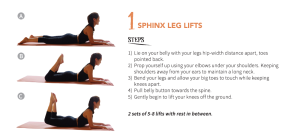
This pose builds strength in the lower back, glutes, and hamstrings while keeping the spine supported. By lifting the legs one at a time or together, you activate the muscles that stabilise the pelvis and support the lumbar spine.
Sphinx Leg Lifts are especially helpful for people with back pain caused by weak core and hip muscles, which often place extra strain on the lower back. The gentle backbend also encourages spinal extension without compression, making it safer than deeper backbends for beginners or those recovering from discomfort.
Benefits
-
Strengthens the lower back and glute muscles
-
Improves spinal stability and posture
-
Supports long-term back pain prevention
-
Encourages gentle spinal extension
Tips & precautions
-
Keep the abdominal muscles gently engaged to protect the lower back
-
Lift only as high as you can while maintaining control
-
Avoid forcing the movement if you feel compression or pain
Practise this pose slowly and with awareness. Quality matters more than height or speed.
Pose 2: Aeroplane
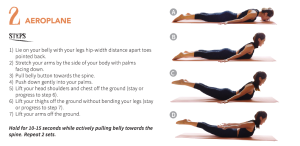
The Aeroplane pose is a strong back-strengthening posture that targets the muscles running along the spine, as well as the glutes and shoulders. By lifting the chest, arms, and legs off the mat, this pose trains the body to support the spine through muscular engagement rather than compression.
This posture is especially useful for people who experience back pain due to poor posture, prolonged sitting, or weak spinal muscles. It improves body awareness and teaches the back muscles to work together as a unit.
Benefits
-
Strengthens the entire back body, including spinal muscles and glutes
-
Improves posture and spinal endurance
-
Builds awareness of core and back engagement
-
Helps counteract the effects of slouching and desk work
Tips & precautions
-
Keep the neck long and avoid lifting the chin too high
-
Engage the abdominal muscles gently to support the lower back
-
Lift only to a height that allows you to breathe steadily
-
Stop if you feel strain in the lower back
Practise Aeroplane with control rather than force. Even small lifts can be highly effective when done with proper alignment.
Pose 3: Bridge
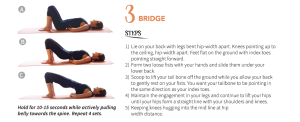
Bridge pose gently opens the front of the body while strengthening the lower back, glutes, and thighs. By lifting the hips while keeping the shoulders grounded, this pose supports the spine and helps counteract stiffness caused by prolonged sitting or poor posture.
For people with back pain, Bridge pose improves spinal mobility and builds strength without placing excessive pressure on the lower back. When done mindfully, it can help relieve tension while encouraging healthier spinal alignment.
Benefits
-
Strengthens the lower back, glutes, and legs
-
Improves spinal flexibility and hip mobility
-
Helps reduce stiffness in the lower back
-
Encourages better posture and body awareness
Tips & precautions
-
Press evenly through both feet to support the lift
-
Keep the knees hip-width apart to protect the lower back
-
Engage the glutes gently rather than squeezing tightly
-
Lower down slowly, one vertebra at a time
Hold the pose for 20–30 seconds, breathing evenly. Focus on lengthening the spine rather than lifting the hips as high as possible.
Pose 4: Side Stretch
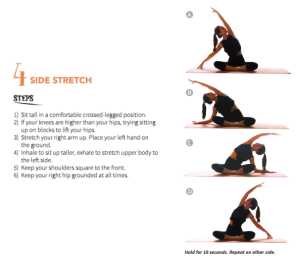
The Side Stretch targets the side body, including the obliques, lower back muscles, hips, and rib cage. These areas often become tight when we sit for long periods or move repetitively in one direction. Stretching them helps reduce uneven tension that can contribute to back pain.
This pose improves spinal mobility by encouraging gentle side bending, which supports a healthier range of motion in the spine. It also creates space between the ribs, making breathing feel easier and more expansive.
Benefits
-
Releases tightness in the lower back and waist
-
Improves side-to-side spinal mobility
-
Stretches the hips, obliques, and rib cage
-
Supports better posture and movement balance
Tips & precautions
-
Keep both sitting bones grounded to avoid collapsing into the lower back
-
Lengthen the spine before bending to the side
-
Move slowly and stay within a comfortable range
-
Avoid forcing the stretch if you feel pinching or strain
Hold the stretch for 10 seconds, then switch sides. Focus on creating length through the side of the body rather than depth.
Pose 5: Seated Twist
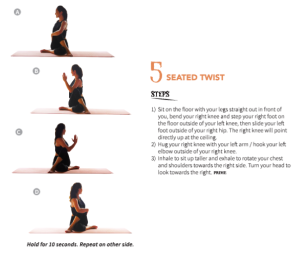
The Seated Twist gently rotates the spine, helping to release tension in the lower and mid-back. Twisting movements encourage spinal mobility and can ease stiffness that builds up from prolonged sitting or repetitive daily movements.
For people with back pain, this pose helps restore natural spinal rotation while promoting better posture and balance. When done slowly and with control, it can also support digestion and improve body awareness.
Benefits
-
Improves spinal rotation and flexibility
-
Releases tension in the lower and mid-back
-
Encourages better posture and alignment
-
Helps restore balance after strengthening poses
Tips & precautions
-
Sit tall before twisting to avoid rounding the spine
-
Twist gently from the waist, not the shoulders alone
-
Keep the breath smooth and relaxed
-
Avoid forcing the twist if you feel discomfort
Hold the twist for 10 seconds, then repeat on the other side. Focus on lengthening the spine before deepening the rotation.
Conclusion
Back pain is often the result of weak muscles, limited mobility, and daily habits that place strain on the spine. Rather than offering quick relief alone, yoga addresses these underlying issues by strengthening the body, improving flexibility, and restoring balance through mindful movement.
When practised regularly, the five poses shared above can help build a stronger, more supportive back while easing tension and stiffness over time. As Jasmine emphasises, consistency and awareness matter more than intensity. Moving slowly, listening to the body, and practising with proper guidance can make yoga a sustainable and long-term approach to back health.
Whether you are managing existing discomfort or looking to prevent future pain, yoga offers a gentle yet effective way to support the spine, improve posture, and enhance overall wellbeing. PRIME