

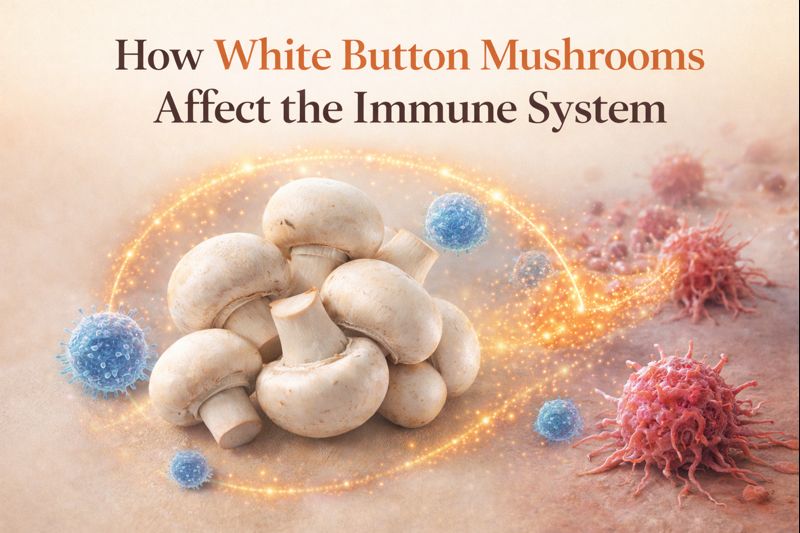
White button mushrooms shown supporting immune function, illustrating research on their role in enhancing the body’s natural cancer-fighting response.
Researchers are increasingly interested in the health benefits of mushrooms and their bioactive compounds. Studies show that culinary mushrooms differ from medicinal mushrooms in both composition and regulation. Among them, the common white button mushroom has drawn attention for its potential role in prostate cancer treatment.
How White Button Mushrooms Affect the Immune System
In a recent study, researchers at the City of Hope Comprehensive Cancer Centre in California examined the effects of white button mushroom extract in mice and humans with prostate cancer. They found that treatment reduced levels of immune-suppressing cells within tumours. At the same time, levels of immune cells involved in killing cancer cells increased.
The immune system normally detects and destroys cells with harmful genetic mutations. Cancer cells survive by creating an immune-suppressive environment that allows them to evade detection. By reducing immune-suppressing cells within tumours, the immune system may regain its ability to target and destroy cancer cells.
Key Findings From Preclinical and Clinical Studies
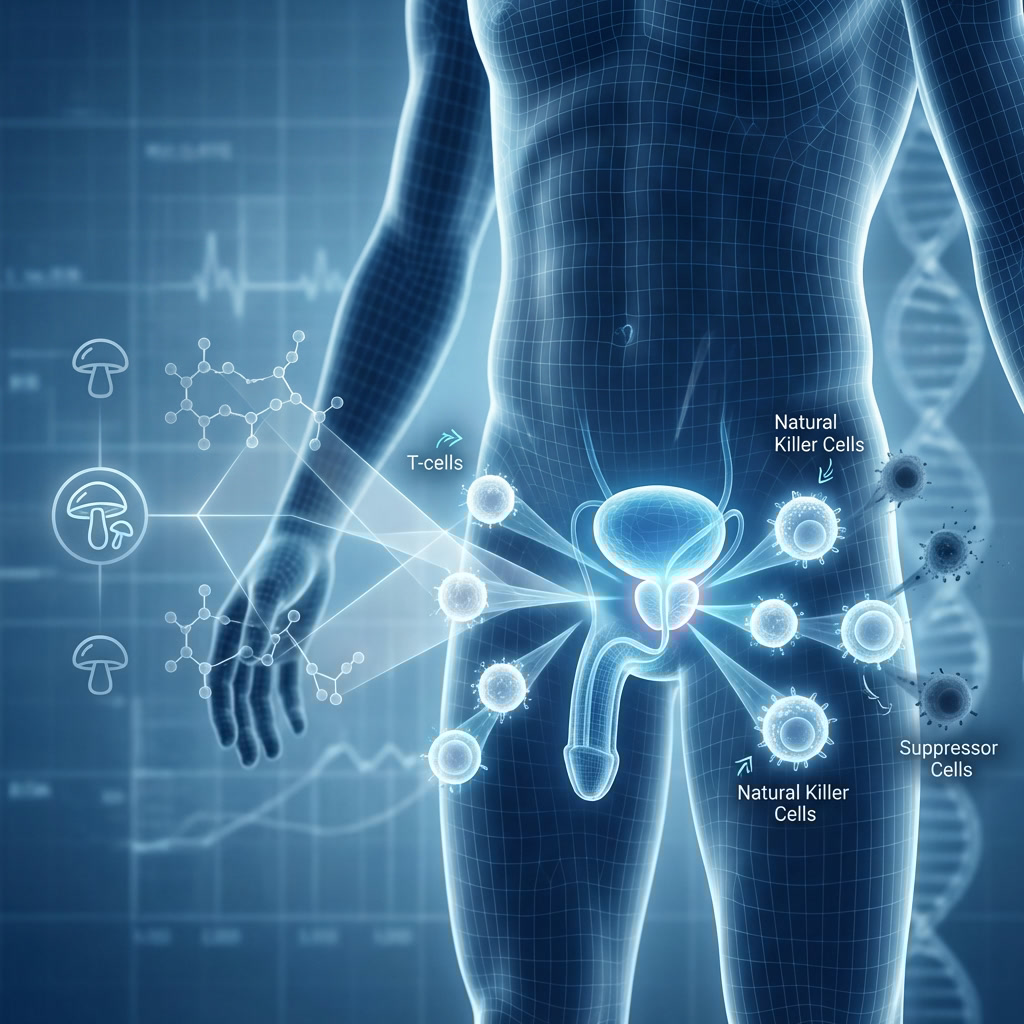
White button mushroom compounds may help slow prostate cancer growth by supporting immune activity.
The study, published in Clinical and Translational Medicine, suggested that polysaccharides found in white button mushrooms may slow prostate cancer tumour growth. The researchers proposed that these compounds could enhance the effects of existing immunotherapies, including immune checkpoint inhibitors.
Earlier studies by the same research team showed that prostate cancer patients who consumed white button mushroom extract tablets experienced a reduction in myeloid-derived suppressor cells. These cells weaken immune responses and contribute to cancer progression. Based on these findings, the researchers hypothesised that white button mushrooms may limit tumour growth by suppressing these cells.
Results From Animal Studies
The researchers first tested the extract in mouse models of prostate cancer. Mice that received white button mushroom extract showed slower tumour growth. The treatment reduced myeloid-derived suppressor cells while increasing cancer-fighting T cells.
Human Trial Results Show Similar Trends
The team then conducted a small human clinical trial involving eight prostate cancer patients. Blood samples taken before and after three months of treatment revealed similar immune changes. Levels of myeloid-derived suppressor cells decreased, while T cells and natural killer (NK) cells increased. Both immune cell types play a key role in attacking cancer cells.
Combining Mushroom Extract with Immunotherapy
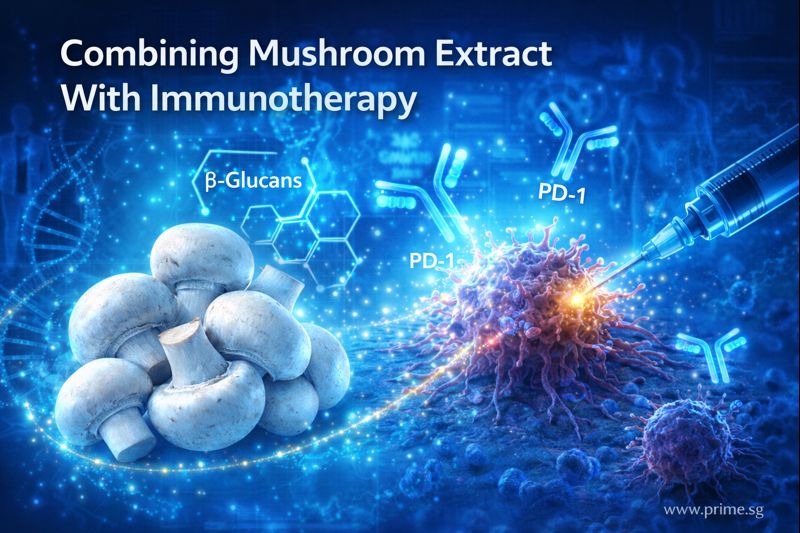
Combining Mushroom Extract With Immunotherapy
Further mouse studies explored whether white button mushroom extract could enhance standard immunotherapy. Researchers combined mushroom extract with anti-PD-1 antibodies, a common prostate cancer treatment. Mice receiving both therapies showed greater tumour suppression than those given immunotherapy alone. They also lived an average of eight days longer.
The researchers attributed these effects to β-glucans, a type of polysaccharide found in white button mushrooms. β-glucans are known to influence immune responses when consumed in the diet. Other studies have reported similar immune-modulating effects from mushroom-derived polysaccharides, supporting this proposed mechanism.
What This Means for Future Cancer Treatment
The findings highlight the need for further research to identify the specific β-glucans responsible for these immune-boosting effects. Understanding their molecular action could help optimise their use alongside existing cancer treatments. The results also suggest that mushroom-based compounds may have broader applications in cancer immunotherapy.
Although the study remains ongoing and the results come from a Phase II trial, the researchers noted that adding fresh white button mushrooms to the daily diet is unlikely to cause harm. As research continues, these everyday mushrooms may prove to be more powerful than previously thought. PRIME
Author

You Might Also Like:
 Rear Agony – Piles: Protector or a Pain? Time to Debunk the Myths! by Dr Mark Wong Te Ching
 Protecting Your Prostate: Understanding Prostate Health by Dr Joe Lee
 An Upright Battle – Erectile Dysfunction by Dr Joe Lee
 Presbyopia (Lao Hua): Why Near Vision Gets Blurry After 40
 Advances in Retinal Disease Treatment by Dr Leonard Ang


Leave A Comment