

Heart Health & Preventive Cardiology
Popular Sugar Substitute May Affect Brain and Blood Vessel Health
PRIME

What Is Erythritol and Why Is It Popular?
Erythritol is a sugar alcohol used as a low-calorie sweetener. It appears in many sugar-free and keto products, such as snack bars and energy drinks.
The U.S. Food and Drug Administration approved erythritol in 2001. Since then, companies have marketed it as a healthier alternative to sugar. As a result, many people use it to lose weight or control blood sugar.
However, concerns about its safety are growing. In fact, recent studies link higher erythritol levels in the blood to a greater risk of heart attack and stroke. Researchers believe this may relate to increased blood clot formation.
New Study Raises Fresh Concerns
Recently, scientists presented new findings at the American Physiology Summit 2025. The study is expected to appear in the Journal of Applied Physiology.
Researchers from the University of Colorado Boulder examined how erythritol affects brain blood vessel cells. To do this, they exposed human cells to about 30 grams of erythritol. This amount is similar to what one can of a sweetened drink contains. They then observed the cells for three hours.
Oxidative Stress Increases
The researchers found a clear increase in oxidative stress. Specifically, the treated cells produced nearly twice as many reactive oxygen species (ROS) as untreated cells.
These harmful molecules can damage cells. Therefore, the cells increased their antioxidant activity. However, this response did not fully balance the stress.
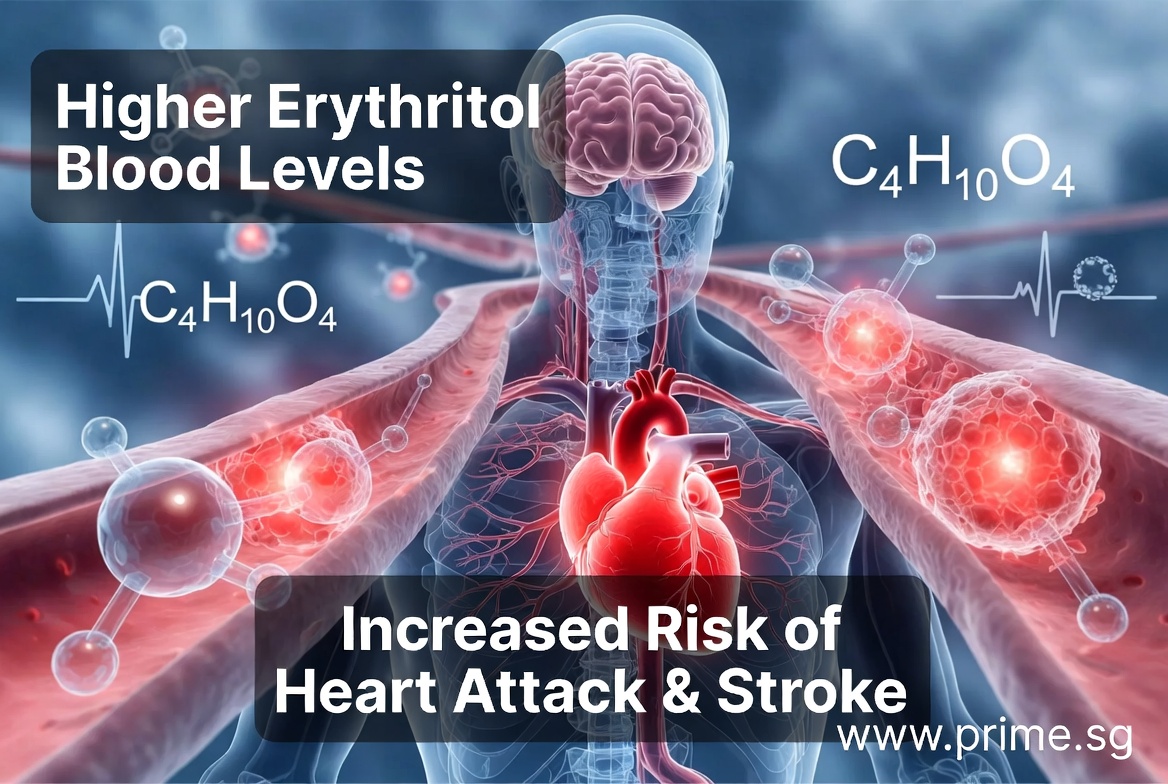
Higher erythritol levels linked to increased heart attack & stroke risk (heart, brain vessels, blood clots, molecular interaction).
Nitric Oxide Levels Drop
At the same time, nitric oxide production fell. This molecule helps blood vessels relax and widen. As a result, it plays a key role in maintaining healthy blood flow.
Erythritol appears to disrupt this process. In particular, it interferes with a key step needed to produce nitric oxide. Consequently, blood vessels may not function as well, which can affect circulation.
Why This Matters for Brain Health
Both oxidative stress and reduced nitric oxide link to early vascular disease. Over time, these changes may increase the risk of stroke and blood clots.
In addition, high ROS levels may damage brain cells. This damage can contribute to cognitive decline. Furthermore, poor blood flow may worsen this effect.
Link to Heart Attack and Stroke Risk
These findings support earlier clinical studies. Previously, researchers observed that higher erythritol levels were linked to increased risk of heart attack and stroke.
Although this study used cells, it helps explain how erythritol may affect the body. In other words, it shows a possible biological mechanism behind the risk.
What Should Consumers Take Away?
Erythritol remains widely used and is generally considered safe in moderation. However, this research suggests caution.
For example, people with cardiovascular risk factors should pay closer attention. These include those with diabetes, high blood pressure, or heart disease.
Therefore, moderation is important. Consumers should also check labels, especially on multiple “sugar-free” products.
Conclusion
Erythritol has long been seen as a harmless sugar substitute. However, new evidence challenges this view. It may affect brain and blood vessel health by increasing oxidative stress and reducing nitric oxide.
More human studies are still needed. Nevertheless, a balanced approach to sweeteners remains the safest choice.










Leave A Comment