

Protein and fibre for fullness
If you’ve ever eaten a meal that should have been “enough” — yet found yourself hungry again an hour later — you’re not alone. Calories alone don’t determine how full you feel. What matters more is how your body responds to what you eat.
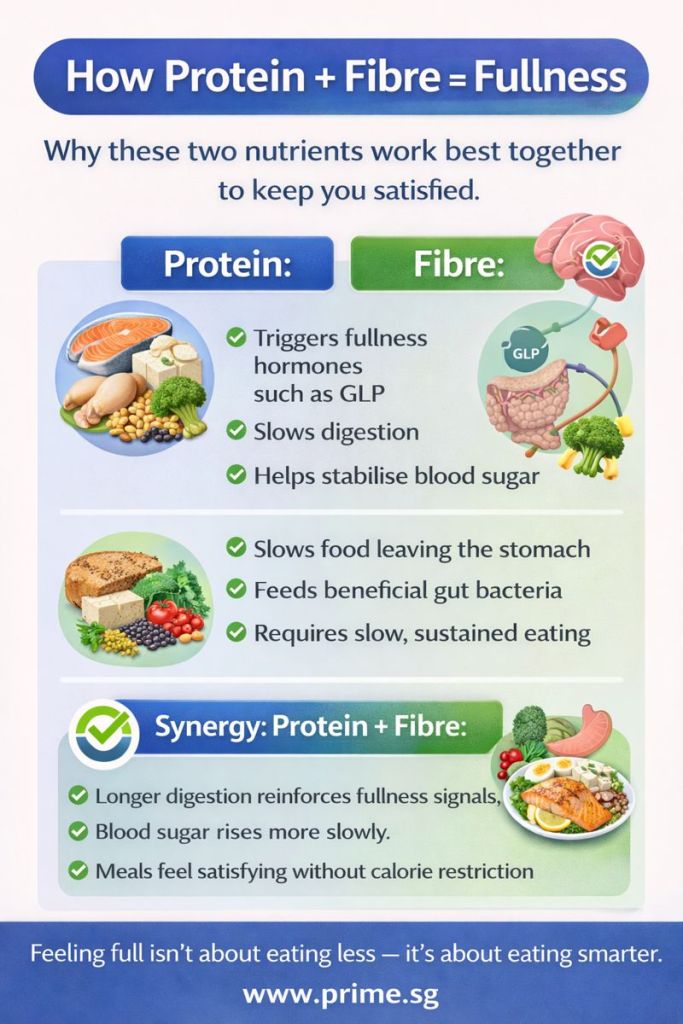
Two nutrients play an especially important role in this process: protein and fibre. When eaten together, they help activate the body’s natural fullness signals, including a gut hormone called GLP, making meals more satisfying and easier to sustain.
What fullness really means (it’s not about eating more)
Feeling full isn’t just about stomach volume. True fullness — known as satiety — is the result of communication between your gut, brain, and hormones.
When this system works well, you:
-
Feel satisfied sooner
-
Stay full longer
-
Snack less between meals
-
Experience fewer blood sugar crashes
Protein and fibre support this system in different but complementary ways.
Detailed digestive system anatomy illustration
How protein supports fullness
Protein is often associated with muscle, but its role in appetite control is just as important.
Protein:
-
Triggers the release of fullness hormones such as GLP
-
Slows digestion compared to refined carbohydrates
-
Helps stabilise blood sugar after meals
Meals that are too low in protein digest quickly, which can lead to hunger returning sooner — even if calories were adequate.
This is why breakfasts built around toast, pastries or cereal often lead to mid-morning hunger, while protein-rich breakfasts tend to last longer.
How fibre supports fullness differently
Fibre works through a different mechanism.
Unlike protein, fibre:
-
Adds bulk without adding calories
-
Slows how quickly food leaves the stomach
-
Feeds beneficial gut bacteria, which support hormone signalling
Fibre-rich foods also require more chewing and slow eating — both of which allow fullness signals time to register.
However, fibre alone is often not enough. A high-fibre but low-protein meal may still leave you unsatisfied.
Why protein and fibre work best together

Balanced meal for healthy digestion
When protein and fibre are eaten together, they create a synergistic effect:
-
Protein stimulates fullness hormones
-
Fibre prolongs digestion and extends the fullness signal
-
Blood sugar rises more slowly and steadily
This combination helps you feel satisfied without needing large portions or strict control.
It also explains why meals built around whole foods — vegetables, legumes, lean proteins, eggs, tofu, fish — tend to be more filling than ultra-processed convenience foods.
What this means for everyday meals
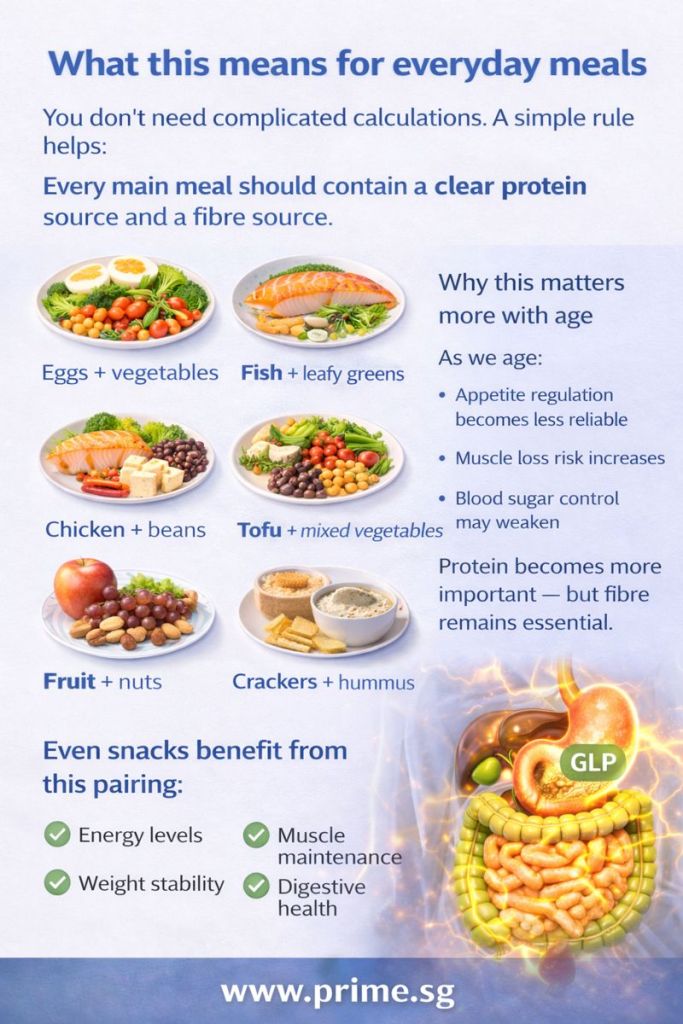
You don’t need complicated calculations. A simple rule helps:
Every main meal should contain a clear protein source and a fibre source.
Examples:
-
Eggs + vegetables
-
Fish + leafy greens
-
Chicken + beans
-
Tofu + mixed vegetables
-
Greek yoghurt + berries + seeds
Even snacks benefit from this pairing:
-
Fruit + nuts
-
Crackers + hummus
-
Yoghurt + chia seeds
Why this matters more with age
As we age:
-
Appetite regulation becomes less reliable
-
Muscle loss risk increases
-
Blood sugar control may weaken
Protein becomes more important — but fibre remains essential.
Together, they support:
-
Energy levels
-
Muscle maintenance
-
Weight stability
-
Digestive health
This makes protein–fibre pairing especially relevant for adults in midlife and beyond.
Healthy eating for adults explained
The takeaway
Feeling full isn’t about eating less — it’s about eating smarter.
Protein and fibre work together to:
-
Support natural fullness signals
-
Reduce cravings
-
Make meals more satisfying
Instead of focusing on restriction, focus on composition. When meals are built well, appetite often takes care of itself. PRIME







Leave A Comment