

If you’ve ever wondered why some meals keep you full for hours while others leave you hunting for snacks soon after, the answer may not be willpower — it may be a hormone called GLP.
You may have seen the term floating around in weight-loss discussions, diet trends, or headlines about new medications. Yet when you ask around, many people admit the same thing:
“I’ve heard of it… but I don’t actually know what GLP is.”
Let’s change that.
What is GLP (in simple terms)?
GLP, short for Glucagon-Like Peptide, is a natural hormone produced in your gut.
Your body releases it every time you eat, especially when your meal contains protein and fibre.
Its main role is to help your body answer three important questions:
-
Am I full yet?
-
How fast should I digest this food?
-
How should my blood sugar be handled?
In short, GLP helps regulate appetite, fullness, and energy balance.

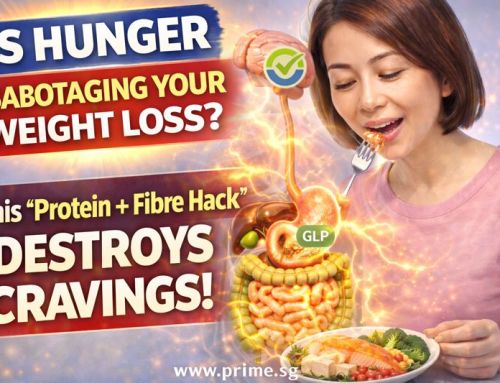
How GLP-1 Works in the Body: Brain, Stomach, and Pancreas Explained
Why GLP is sometimes called the “fullness hormone”
Think of GLP as your body’s internal braking system for eating.
When GLP is released, it:
-
Sends signals to the brain that you’ve had enough
-
Slows how quickly food leaves your stomach
-
Helps prevent sharp spikes and crashes in blood sugar
That’s why when GLP is working well, you tend to:
-
Feel satisfied sooner
-
Stay full longer
-
Snack less between meals
When GLP signalling is weaker, you may notice the opposite — frequent hunger, cravings, and overeating even when portions seem reasonable.
Why GLP becomes more important as we age

When GLP responses are poor
Many people notice that appetite and weight behave differently in midlife and beyond. This isn’t just lifestyle — hormonal regulation changes with age.
As we get older:
-
Appetite cues can become less reliable
-
Blood sugar control may weaken
-
Muscle mass declines if protein intake is too low
GLP plays a role in all of this.
When GLP responses are poor, people may eat more than they need or eat too little protein, increasing the risk of fatigue, muscle loss, and unstable energy levels.
This is why GLP is now a key topic in discussions about healthy ageing, not just weight loss.
How food affects GLP naturally
Here’s the encouraging part:
You don’t need medication to influence GLP.
Certain eating habits naturally support GLP release:
1. Protein at meals
Protein is one of the strongest triggers for GLP.
Meals with adequate protein tend to keep you fuller for longer.
2. Fibre-rich foods
Vegetables, legumes, and whole grains slow digestion and enhance GLP signalling.
3. Balanced meals (not sugar-heavy)
Highly refined, sugary foods digest too quickly and don’t support sustained GLP release.
4. Slower eating
Eating too fast can blunt fullness signals — your gut hormones need time to “talk” to your brain.
These principles explain why some traditional diets and home-cooked meals feel more satisfying than ultra-processed convenience foods.
Why GLP suddenly appears in weight-loss conversations

Why GLP Suddenly Appears in Weight-Loss Conversations
In recent years, medications have been developed that mimic or enhance GLP’s effects. These are often referred to as GLP-1 medications.
They work by:
-
Strengthening the body’s fullness signals
-
Reducing appetite
-
Slowing digestion more significantly
This has led to dramatic weight loss for some people — and huge public interest.
But here’s what’s often missed:
GLP itself is not new.
The hormone has always been part of how your body regulates eating.
The medications simply amplify a natural system that already exists.
Why understanding GLP matters — even if you’re not on medication
You may never take a GLP-1 medication, and that’s perfectly fine.
Understanding GLP still helps you:
-
Make smarter food choices
-
Avoid chasing extreme diets
-
Focus on fullness and nourishment, not restriction
It also explains why:
-
Protein-focused meals feel different
-
Fibre matters more than calories alone
-
“Eating less” without balance often backfires
GLP shifts the conversation from control to biology — and that’s empowering.
The rise of “GLP-friendly” food labels — what to know
You may soon see products marketed as “GLP-friendly” or “GLP-supportive”.
In reality, most of these foods simply:
-
Contain more protein
-
Have higher fibre
-
Are lower in added sugars
These are not new ideas — they are basic principles of good nutrition, now being reframed through the lens of GLP.
Knowing how GLP works helps consumers see through hype and focus on fundamentals.
The takeaway: GLP is about eating smarter, not less
GLP isn’t a fad.
It’s a biological system that helps explain hunger, fullness, and energy — something humans have always experienced but are only now talking about openly.
By understanding GLP, you’re better equipped to:
-
Build meals that satisfy
-
Support metabolic health
-
Eat in a way that works with your body, not against it
And this understanding sets the stage for deeper conversations — about food choices, weight-loss medications, and what healthy eating really looks like today. PRIME




Leave A Comment