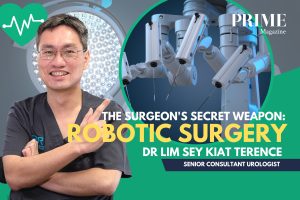

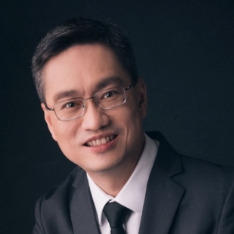
Dr Terence Lim Sey Kiat is a Senior Consultant Urologist and Medical Director at Assure Urology & Robotic Centre. With over two decades of experience in public healthcare, he specialises in uro-oncology, endourology, robotic and minimally invasive urological surgery. He has performed more than 700 robotic urological procedures and was one of the first in Singapore to perform a robot-assisted Retzius-sparing prostatectomy.
Education & Professional Training
- MBBS, National University of Singapore
- Master of Medicine (Surgery), National University of Singapore
- Member, Royal College of Surgeons Edinburgh (MRCSEd)
- Specialist Accreditation in Urology, Singapore Medical Council
- Fellowship training in laparoscopic and robotic urological surgery (including use of da Vinci system)
Subspecialty Expertise
- Uro-oncology: prostate cancer, bladder cancer, kidney cancer and testicular cancer
- Minimally invasive & robotic urological surgery: robot-assisted nephrectomy, prostatectomy, cystectomy, endourology and urinary stone disease
- Urinary stone disease and endourology (kidney/ureteric stones)
- Prostate health: benign prostatic hyperplasia, robotic and laser therapies
Contributions to Public Healthcare
Dr Lim served as Senior Consultant and Head of Department of Urology at Changi General Hospital (CGH) where he helped establish the hospital’s robotic surgery programme, and his department received multiple quality awards during his tenure. He continues to act as Visiting Consultant at CGH and mentors surgeons in minimally invasive and robotic urology.
Key Focus Areas
- Urological cancers (prostate, kidney, bladder, testicular)
- Robotic and minimally invasive surgery for prostate and kidney conditions
- Kidney and ureteric stones, endourology
- Prostate health, benign prostatic enlargement and advanced prostate procedures
- Urinary incontinence, urethral stricture, male pelvic health
Clinical Approach
Dr Lim provides comprehensive evaluation and management of urological conditions with a focus on minimally invasive and robotic procedures where clinically appropriate. He emphasises explaining treatment options clearly, coordinating care across diagnostics and surgery, and supporting post-procedure recovery and follow-up.
Articles